What Exactly Does the L70 Lifespan Standard Mean for UVC LED Water Sterilizers?
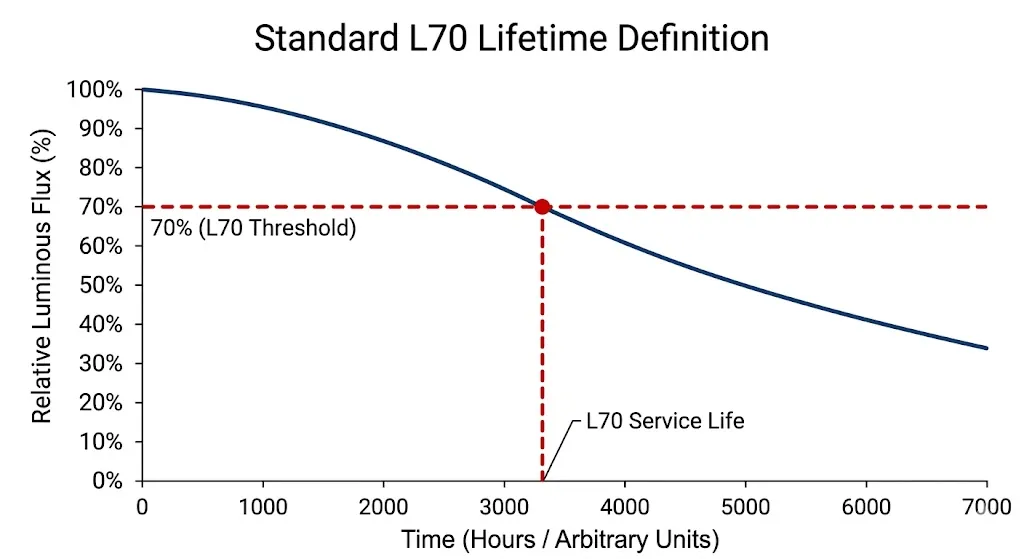
The L70 lifespan standard indicates the operating time at which a UVC LED’s radiant power declines to 70% of its initial output under defined test conditions. For integrators, this metric helps plan preventative maintenance and support verified disinfection performance under specified flow rate, water quality, and operating conditions. Noticeably, this standard transforms unpredictable maintenance into highly manageable, preventative service schedules.
1. The Science Behind L70 and 270–280nm Wavelengths
The L70 lifespan refers to the cumulative operating time required for an LED light source’s output (radiant flux) to decay to 70% of its initial value under specific operating conditions. According to standards established by the Illuminating Engineering Society (IES) of North America, determining this metric relies on combining LM-80 experimental data with the TM-21 projection model. Specifically, the LM-80 standard specifies the lumen maintenance testing method for LED packages, modules, or arrays in a controlled environment. It generally requires continuous testing for at least 6,000 to 10,000 hours at a minimum of three temperature points (e.g., 55°C, 85°C, and a manufacturer-defined temperature).
During the testing process, technicians precisely measure the LED’s radiant flux, chromaticity, and electrical parameters every 1,000 hours. Subsequently, they utilize the mathematical model provided by the TM-21 standard to perform an exponential fit on these discrete data points. The functional relationship of lumen maintenance over time is typically expressed as:
$$\Phi(t) = \beta \cdot e^{-\alpha t}$$
Here, $\Phi(t)$ represents the normalized lumen maintenance at time $t$, $\beta$ is the projected initial constant, and $\alpha$ is the decay rate constant. Based on this, the formula for calculating L70 is further derived as:
$$L_{70} = \frac{\ln(\beta / 0.7)}{\alpha}$$
This rigorous mathematical derivation makes the nominal lifespan more transparent and comparable. For integrators, L70 is not merely a number; it represents a practical reference point for planning maintenance before UV output declines beyond the design margin of the system.
1.1 The Biological Foundation: Why 270–280nm is an Engineering Sweet Spot for UVC LED Water Disinfection
Before discussing decay, we must define the target. Ultraviolet-C (UVC) light, specifically in the 200–280nm range, is used for physical germicidal inactivation. However, not all wavelengths within this range perform the same in real UVC LED products.
The DNA/RNA absorption curve reaches its maximum near 260–265nm. In this high-efficiency region, UVC photons damage the genetic material of microorganisms and prevent replication when the delivered UV dose is sufficient for the target organism and water conditions.
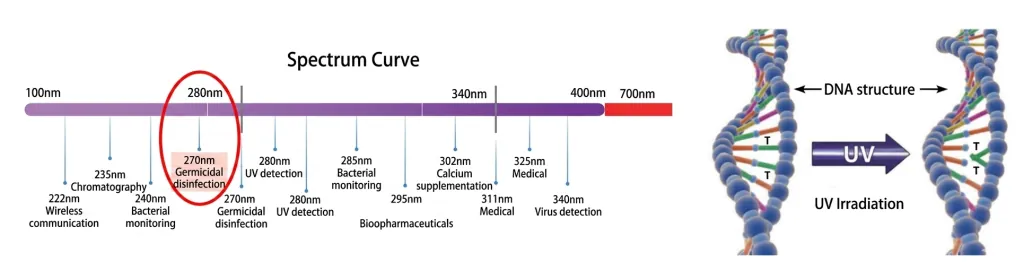
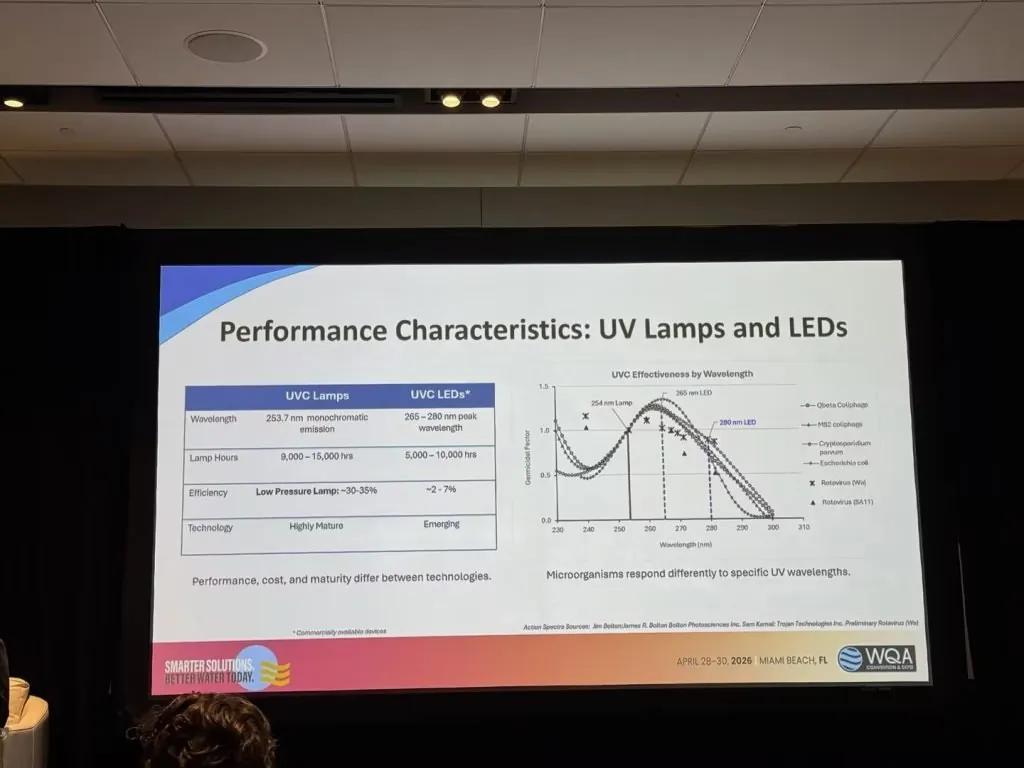
Agua Topone utilizes the 270–280nm waveband because it is close to the DNA/RNA absorption peak and provides a better engineering balance between germicidal efficiency, UVC LED chip stability, optical output, and long-term reliability. Therefore, the L70 standard is not just about light intensity; it is about helping the system maintain validated UV output within its intended operating window.
1.2 UVC LED Light Decay Mechanisms and Environmental Stress
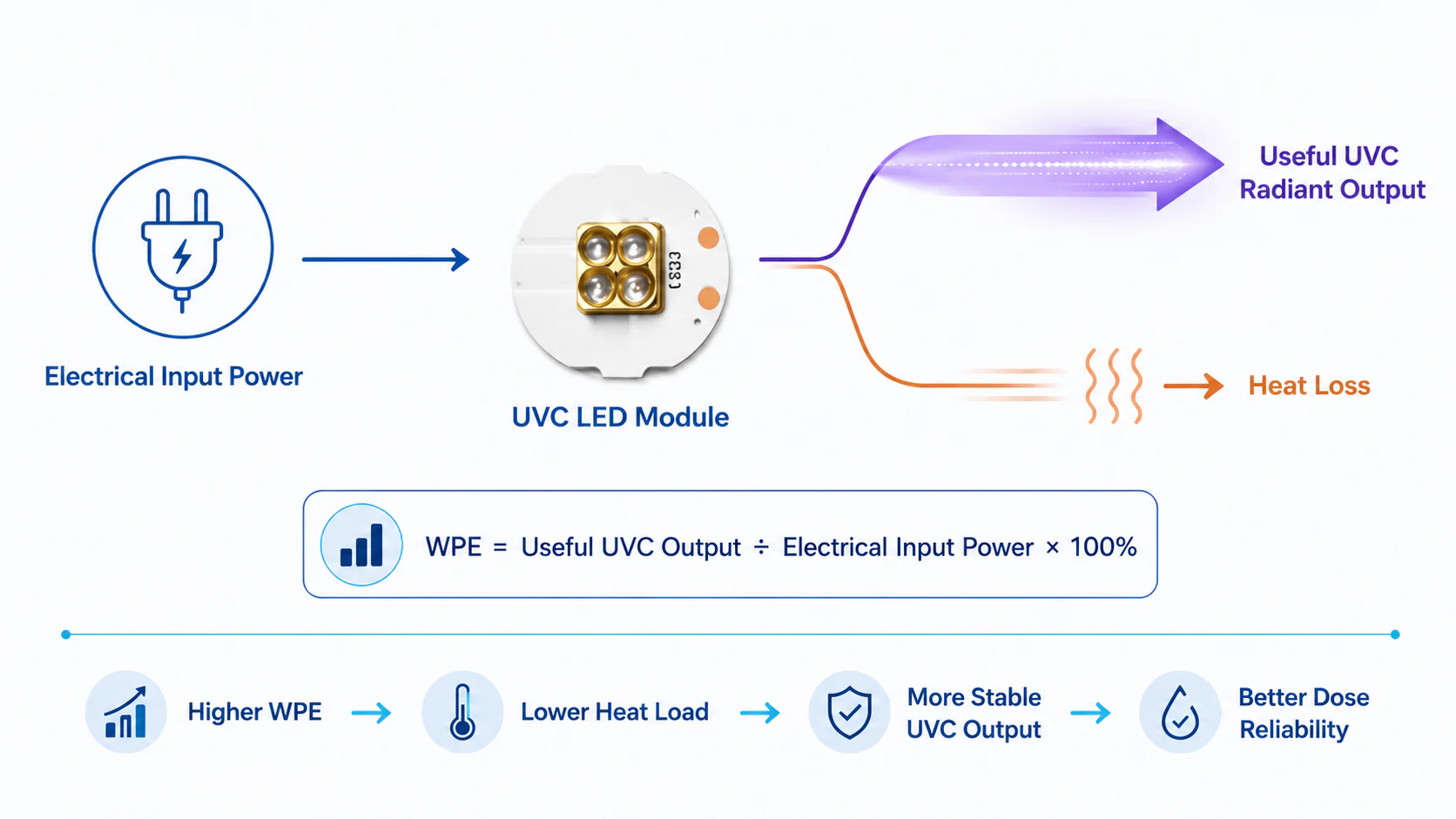
Material defects, thermal stress, and packaging degradation primarily dictate the light decay of UVC LEDs. Because the Aluminum Gallium Nitride (AlGaN) material used in UVC LEDs possesses a high bandgap energy, its Internal Quantum Efficiency (IQE) remains extremely sensitive to lattice defects. During operation, if the system fails to rapidly dissipate the Joule heat generated by current injection, the Junction Temperature ($T_j$) will inevitably rise. Consequently, this heat buildup accelerates the evolution of dislocations and the increase of non-radiative recombination centers.
Therefore, thermal management technology plays a decisive role in maintaining the L70 lifespan. Higher junction temperature accelerates light decay and increases the risk of early failure. To combat this, utilizing high-thermal-conductivity Aluminum Nitride (AlN) ceramic substrates and eutectic soldering processes serves as foundational engineering for improving UVC LED reliability.
The following table compares the impact of different thermal management strategies on L70 lifespan expectations:
| Thermal Management Component | Key Performance Indicator | Contribution Logic to L70 Lifespan |
| Substrate Material | High-thermal-conductivity AlN ceramic | Rapidly dissipates junction heat, minimizing thermal droop |
| Soldering Process | Gold-Tin (AuSn) eutectic soldering | Establishes an interfacial connection with low thermal resistance, reducing thermal fatigue |
| Packaging Format | Protective packaging design | Helps isolate moisture and pollutants, protecting the chip surface from oxidation |
| Heat Dissipation Architecture | Expanded backside cooling area | Increases the effective heat exchange area, maintaining a stable operating temperature |
Consequently, the core characteristics defining a UVC LED (under the L70 standard) include:
| Feature | UVC LED (L70 Standard) |
| Failure Mechanism | Predictable, gradual UV output decay |
| Lifespan Tracking | Precise monitoring via smart drivers |
| Maintenance Strategy | Preventative, scheduled component replacement |
| Dose Reliability | Helps maintain verified disinfection performance when the system is designed with sufficient dose margin |
Furthermore, efficient thermal management directly affects how fast this decay occurs. By effectively dissipating heat, developers can slow degradation and help maintain verified disinfection performance under specified operating conditions.
2. Smart Drivers: The Strategic Value of the 5,000-Hour Countdown Reminder
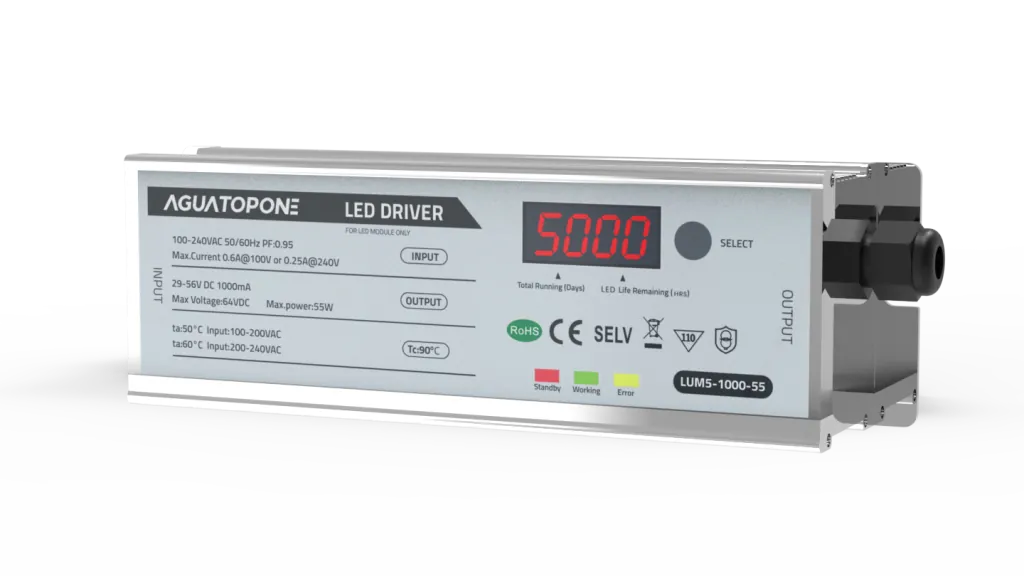
In UVC LED application systems, the driver (or ballast) acts as the “brain” of the system. While traditional drivers merely handle current conversion, the new generation of smart drivers completely revolutionizes product maintenance logic by integrating advanced time management and status monitoring capabilities.
 (opens in a new tab)
2.1 Addressing the “Invisibility” Risk in UVC Disinfection
The greatest challenge of ultraviolet disinfection lies in its colorless, odorless nature and invisible light efficacy. Users cannot intuitively perceive whether the LED’s sterilization capacity has degraded below safe thresholds. Ultimately, this uncertainty acts as the primary trigger for after-sales complaints for integrators: users either continue consuming contaminated water after the LED chips fail (leading to health issues) or they frequently contact customer service out of sheer anxiety regarding the replacement cycle.
Smart drivers equipped with a 5,000-hour countdown reminder function effectively solve this by precisely recording the actual on-time of the LEDs, transforming invisible performance degradation into explicit digital feedback. For Agua Topone UVC LED systems, the 5,000-hour countdown is designed as a practical maintenance reminder aligned with the module’s rated service life and internal reliability validation.
2.2 The Logic Behind the 5,000-Hour Threshold
Setting the 5,000-hour threshold has practical engineering value. In typical residential Point-of-Entry (POE) whole-house water purification applications, UVC LEDs can activate only when water flows, so the countdown tracks actual operating time rather than calendar time. The exact replacement interval still depends on the product model, usage pattern, water quality, operating temperature, and validation requirements.
Through the precise 5,000-hour countdown of the smart driver, integrators can achieve value enhancement across three key levels:
- Determinate Maintenance: The system triggers an audio-visual alarm when the remaining lifespan approaches the 5,000-hour limit, guiding users to replace modules on time and reducing blind guesswork.
- Reducing After-Sales Complaints: A clear countdown display helps enhance the user’s trust in the product. When users can visibly monitor the product’s health status, integrators can reduce unnecessary after-sales inquiries related to replacement timing and perceived sterilization effectiveness.
- Brand Value Anchoring: The countdown function elevates the water purifier from a standard home appliance into a “smart safety assurance system,” empowering integrators to establish a distinct competitive edge in the high-end market.
3. Integrator Perspectives: Post-Sales Risk Prevention and Product Value Addition
For integrators in the water treatment and air purification sectors, shipping a product is merely the beginning of the business relationship. Managing after-sales service costs and protecting brand reputation ultimately determine long-term profitability.
3.1 Primary Triggers for After-Sales Complaints and Data-Driven Solutions
According to market research, complaints regarding water purification equipment mainly concentrate on the following three areas:
- Delayed perception of functional failure: Users only discover the UV lamp has long been broken after tasting foul water.
- Cumbersome maintenance procedures: Replacing a lamp tube or module requires specialized tools and significant system downtime.
- False lifespan promises: Several cheap solutions aggressively advertise long lifespans, but actually suffer from severe light decay in practice.
The introduction of smart drivers helps reduce these triggers through technical intervention. When the driver integrates a flow sensor linkage function, it not only tracks time but ensures the LED operates only when water flows. This “on-demand allocation” mode helps reduce unnecessary thermal load on the LEDs and supports more predictable service life. Furthermore, the driver’s built-in self-diagnostic function (such as a flashing red alarm light) can notify the user immediately if the LED experiences a circuit failure. This proactive warning mechanism is more manageable than passive repair processes.
3.2 Modular Design and Simplified Maintenance
To further boost integrator competitiveness, leading manufacturers like Agua Topone have introduced modular UVC systems (such as the AGLED series) specifically designed to pair with smart drivers. The core of this design lies in the philosophy of separating the core operational components from the outer housing.
| Maintenance Dimension | Modular Smart Solution | Benefit Assessment |
| Replacement Difficulty | Modular replacement without replacing the entire reactor body | Can shorten maintenance time |
| Maintenance Time | Simplified module replacement procedure | Can reduce labor maintenance requirements |
| System Downtime | Simplified module replacement with minimal system downtime | Improves service convenience |
| Data Synchronization | Driver records operating time and supports lifecycle tracking | Supports a closed-loop maintenance schedule |
This technological combination allows integrators to offer end-users a clearer maintenance path: when the core disinfection component approaches the end of its rated service life, the module can be replaced without discarding the entire water purifier. This sustainable design approach is particularly relevant for residential developers and commercial operators that need predictable service planning.
4. Agua Topone’s Engineering Practices: AGLED, EC, and VPS Systems
Agua Topone’s layout in the UVC LED field revolves around the engineering philosophy that “microstructure determines macro lifespan.” Its product lines integrate L70-based reliability thinking with a 5,000-hour countdown reminder to support practical maintenance planning.
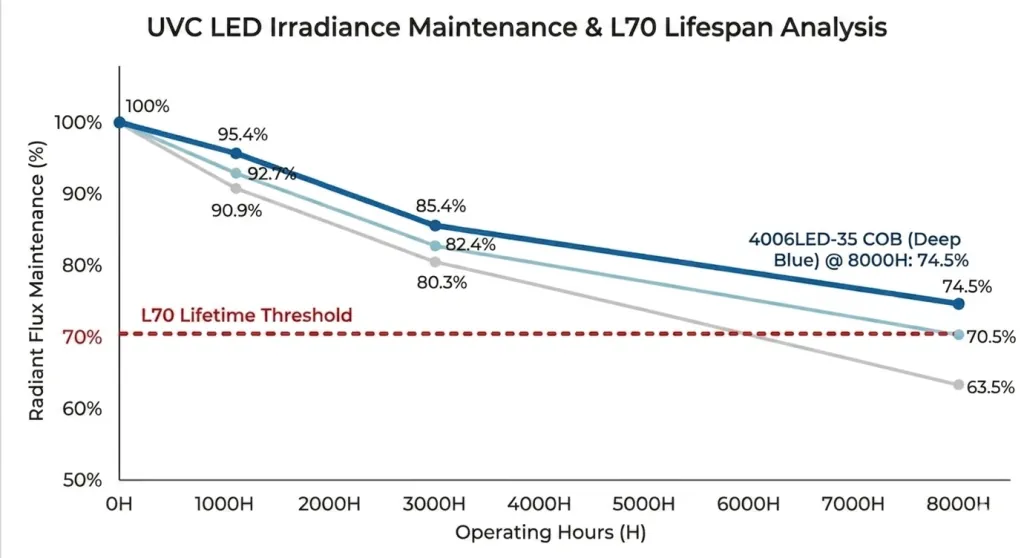
“You are welcome to contact our engineers to request a detailed report.”
4.1 AGLED and EC Series: Precision Rulers for Point-of-Use Disinfection
As compact POU (Point-of-Use) modules, the EC series (such as the EC-10) is engineered to provide instant disinfection for micro-flow systems like water dispensers and coffee machines. Despite their miniature footprint, their rated service life is supported by thermal design, substrate selection, and internal reliability validation.
Meanwhile, the AGLED series (such as the AGLED-40002 (opens in a new tab)) goes a strategic step further by integrating a visual Indicator Ring directly on its housing. This represents more than just an aesthetic design; it acts as a physical extension of the driver’s logic: a steady blue light indicates normal disinfection activity, while a red alarm light signals that the 5,000-hour countdown has reached zero or a circuit fault has occurred. Ultimately, this multi-dimensional status feedback significantly reduces the customer service burden on integrators.
4.2 The Whole-House Protection Logic of VPS Systems
For Point-of-Entry (POE) whole-house water purification scenarios, VPS series systems demonstrate more complex system management capabilities. VPS systems are typically equipped with higher-power LED arrays. To support verified bacterial reduction under specified flow rate and water quality conditions, their smart drivers can employ thermal management and monitoring logic.
Within the smart drivers of VPS systems, the 5,000-hour countdown and real-time light intensity monitoring (UV Sensor) form a more sophisticated closed loop. The driver can use operating-time and sensor feedback to support stable UV output within the product’s validated operating range. This “performance compensation mechanism” serves as technical support for elevating the product’s premium value.
4.3 Manufacturing Controls That Support L70 Reliability
Agua Topone’s 7 Technical Pillars explain how process control supports product reliability and rated service life:
- Scientific Annealing Treatment: Reduces micro-bubbles during the eutectic soldering process and helps lower internal structural stress.
- Plasma Surface Cleaning: Performs micron-level cleaning prior to packaging, improving production consistency and reducing the risk of early failure.
- Vacuum Nitrogen Protection: Prevents photochemical reactions on the chip surface at high temperatures, which would otherwise cause rapid performance degradation.
Conclusion and Future Outlook: A New Era of Profitability for Integrators
The evolution of UVC LED technology has leaped from merely pursuing basic “sterilization” to pursuing intelligent, “manageable sterilization.” For integrators, the L70 lifespan standard is no longer a cold testing parameter; rather, it transforms into a highly effective language for communicating with end-users via smart drivers.
The introduction of the 5,000-hour countdown reminder helps reduce uncertainty associated with “invisible sterilization” and can reduce unnecessary after-sales inquiries by reshaping the maintenance chain. Supported by the 270–280nm UVC LED waveband, proper optical design, validated flow conditions, and verified test data, UVC LED systems can support verified 99.999% bacterial reduction under specified operating conditions. Consequently, true premium capability now stems from intelligent, proactive control over the system’s entire lifecycle.
Specifically, achieving stable L70 reliability requires much more than high-quality chips; it also depends on a clean optical and hydraulic environment. Therefore, the Agua Topone factory implements ultrasonic cleaning for stainless steel chambers to help remove manufacturing oils and impurities that could reduce UV utilization. Combined with suitable optical window design and smart driver monitoring, this process helps the replaceable UVC LED module maintain reliable UV output throughout its rated service life.
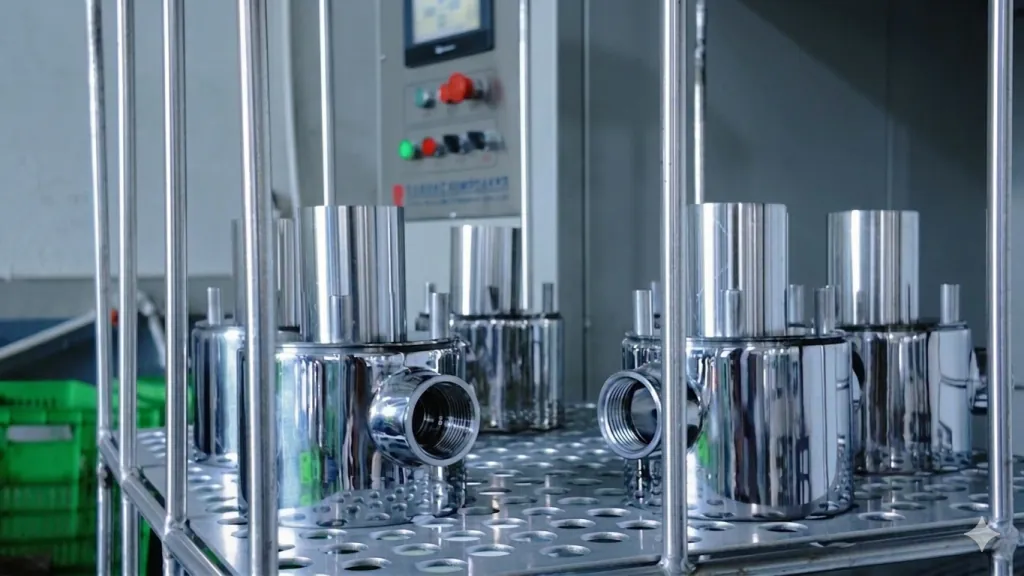
Technical Parameter Summary
| Indicator / Project | Core Value / Standard | Strategic Significance |
| Rated Service Life Reference | 5,000-hour countdown | Designed to align with the module’s rated service life and preventative maintenance schedule |
| Peak Wavelength | 270–280nm | Close to the DNA/RNA absorption peak while balancing germicidal efficiency and UVC LED chip stability. |
| Verified Bacterial Reduction | Up to 99.999% under specified test conditions | Supports high-end residential and commercial hygiene requirements when flow rate, water quality, UVT, dose, and reactor design are validated |
| Smart Driver Functions | 5,000-hour countdown + audio-visual alarm | Transforms “passive complaints” into “proactive maintenance” |
| Thermal Management Base | High-thermal-conductivity AlN ceramic | Delays light decay, physically protecting the L70 curve |
| Optical Window Material | High-transmittance UV optical window | Supports effective photon utilization and stable UV delivery |
Frequently Asked Questions (FAQ)
Q: What does L70 mean for a UVC LED water sterilizer?
A: L70 refers to the precise operational time required for the UVC LED’s light output intensity to decay to 70% of its initial strength. At this specific point, the system requires a module replacement to maintain optimal, safe disinfection performance.
Q: Why do UVC LED systems use a 5,000-hour countdown driver?
A: The smart driver tracks the operating time of the system and alerts the user as it approaches 5,000 hours, which is designed to align with the module’s rated service life and preventative maintenance schedule. This helps maintenance happen before performance drifts outside the validated operating range.
Q: How does ultrasonic cleaning extend the lifespan of UVC LEDs?
A: Ultrasonic cleaning removes microscopic oils and debris from the stainless steel chamber. This helps prevent residues from reducing 270–280nm UV output utilization, thereby supporting stable transmittance and reliable LED operation throughout the module’s rated service life.
Q: Why is the 270–280nm wavelength band widely used in UVC LED water disinfection?
A: The 270–280nm waveband remains close to the DNA/RNA absorption peak while offering better UVC LED chip stability and practical service life. This makes it a strong engineering choice for water disinfection systems that require both microbial reduction and long-term reliability.