
Model · Sample · Conditions · Result
UVC LED Water Disinfection Testing & Validation
Browse the current model-specific SGS microbiological test reports and see the conditions that must travel with each result. Evidence is useful only when it remains tied to the tested sample, method, organism, flow and operating-life point.
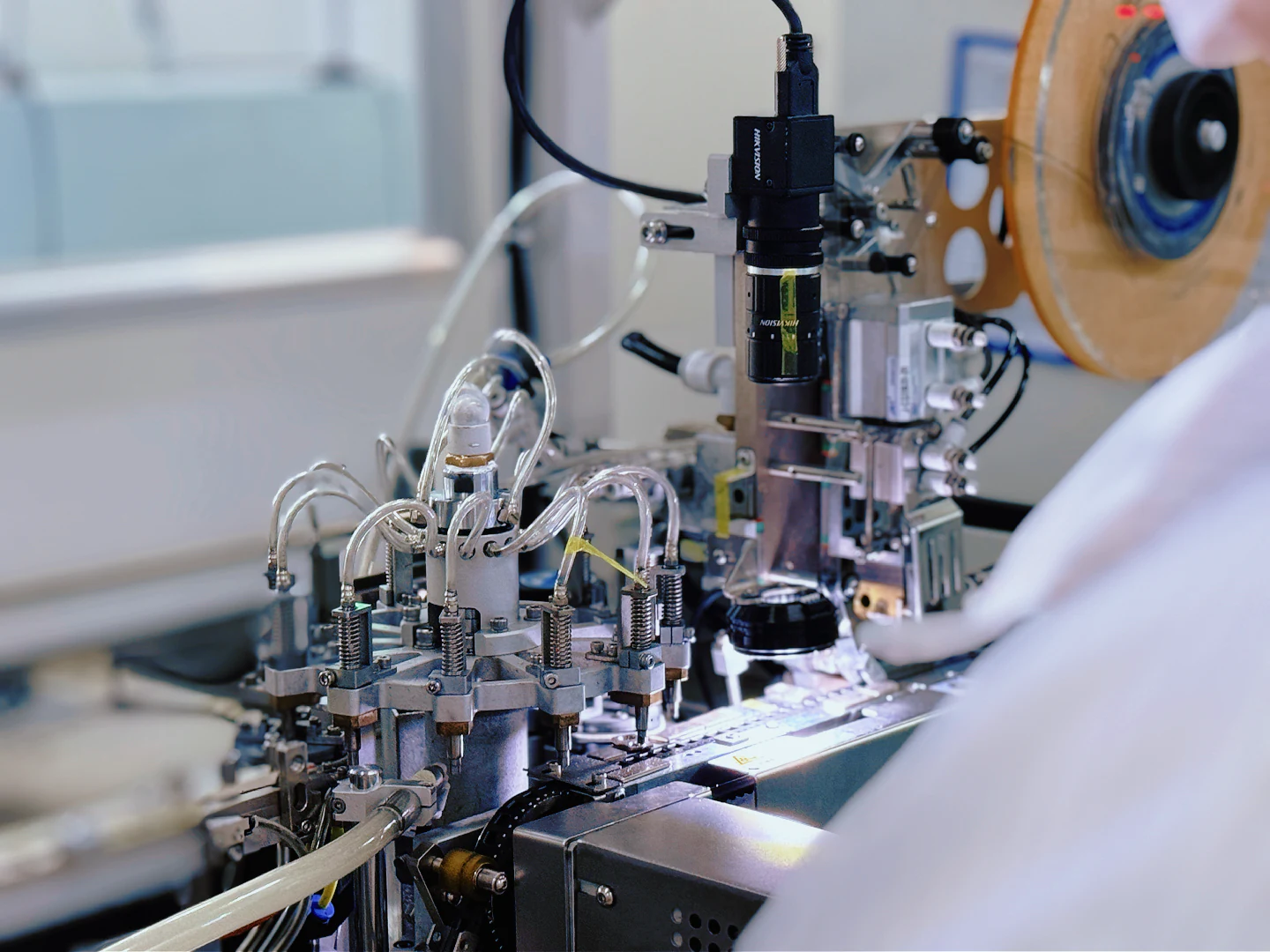
Product verification supports production control; a model-specific SGS PDF remains the source for microbiological report claims.
Evidence used at different stages of product selection
Specifications, optical and hydraulic data, microbiological reports and project validation are complementary. None should be substituted for another.
Product specifications
Define the intended flow class, connections, electrical input, water conditions and service basis for the exact model and variant.
Optical and hydraulic data
UVC output, reactor geometry, delivered dose, flow profile, UVT and pressure drop affect the real operating point.
Microbiological reports
Record the tested sample, organism or indicator, flow, method, life point and reported result before citing the evidence.
Project validation
Identify any gap created by a new configuration, organism, market, flow, control route or finished-appliance integration.
From test request to report
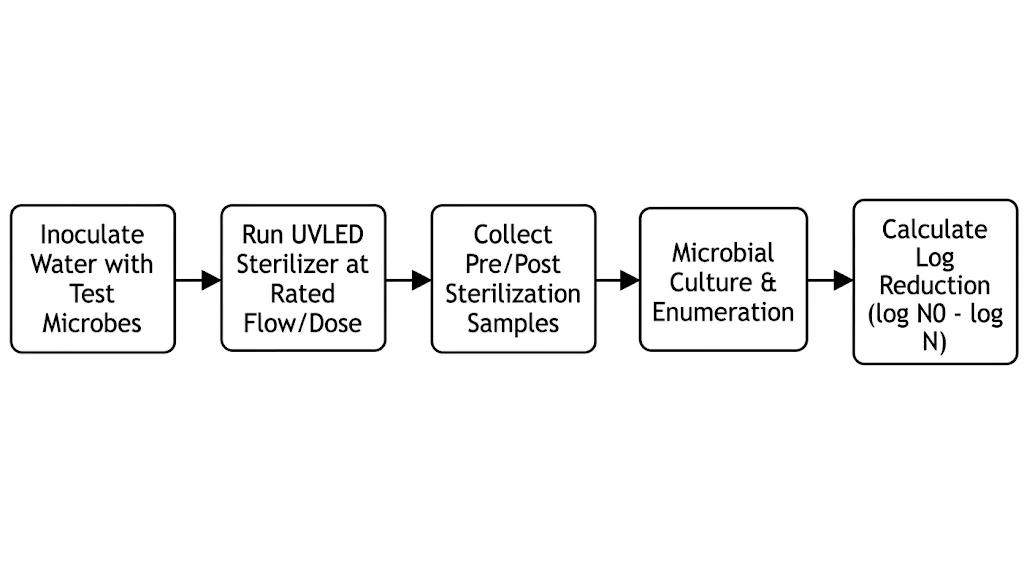
A third-party report documents a submitted sample and requested test under stated conditions. It does not assess every production unit or every possible use condition.
Use the PDF as the controlling source. The directory below summarises the model, report number, flow, test strain and reported result. The full report contains the complete method, result table, limitations and sample image.
Available SGS microbiological reports
Seven model-specific PDFs are available. EC cards show reported results greater than 99.99%; AGLED cards show reported results greater than 99.999%. Open the report for its exact result table and reporting limit.
EC Series reports
AGLED Series reports
AGLED-12G
AGLED-40002
AGLED-40006
AGLED-40012
Scope limit: a report supports the tested sample and stated conditions. It does not establish the same result for another model, organism, flow, UVT, water quality, maintenance state or operating-life point.
How to read model-specific test evidence
| Check | Question to answer | Why it matters |
|---|---|---|
| Model and variant | Which reactor, module, driver and configuration were tested? | Results from one configuration should not be assigned to another model or modified assembly. |
| Sample status | Was the submitted item a production unit, prototype or other defined sample? | The report supports the submitted sample and does not by itself assess every production lot. |
| Target organism or indicator | Which strain and test indicator were used? | A result for one challenge organism cannot automatically be generalised to every bacterium, virus or protozoan. |
| Flow and exposure conditions | What flow and water conditions were stated? | Delivered dose changes with flow, UVT, fouling and reactor conditions. |
| Operating-life point | Was the test performed at startup or after defined ageing? | Startup evidence does not establish end-of-life performance unless ageing is also covered. |
| Result and method | What was measured, by which method and with what reporting limit? | Percent reduction, log reduction and qualitative conclusions are not interchangeable. |
A conservative validation workflow
Define the duty.
Record the application, realistic peak flow, target organism or performance requirement, UVT, pressure, temperature and market.
Record the application, realistic peak flow, target organism or performance requirement, UVT, pressure, temperature and market.
Select a candidate.
Use the POU/POE route, series comparison and current model specification.
Use the POU/POE route, series comparison and current model specification.
Match evidence.
Compare the proposed model, variant, operating point and water conditions with the report.
Compare the proposed model, variant, operating point and water conditions with the report.
Identify gaps.
Flag changes in reactor, control, flow, organism, materials or finished-system integration.
Flag changes in reactor, control, flow, organism, materials or finished-system integration.
Freeze the basis.
Confirm the approved configuration, document set and acceptance criteria before scale-up.
Confirm the approved configuration, document set and acceptance criteria before scale-up.
Request evidence for the exact model and project
Send the model, configuration, peak flow, source-water information, target market and required document type. We will identify the available file and any remaining validation gap.