VPS-103 Whole-House UV Water Filter Installation in Pennsylvania
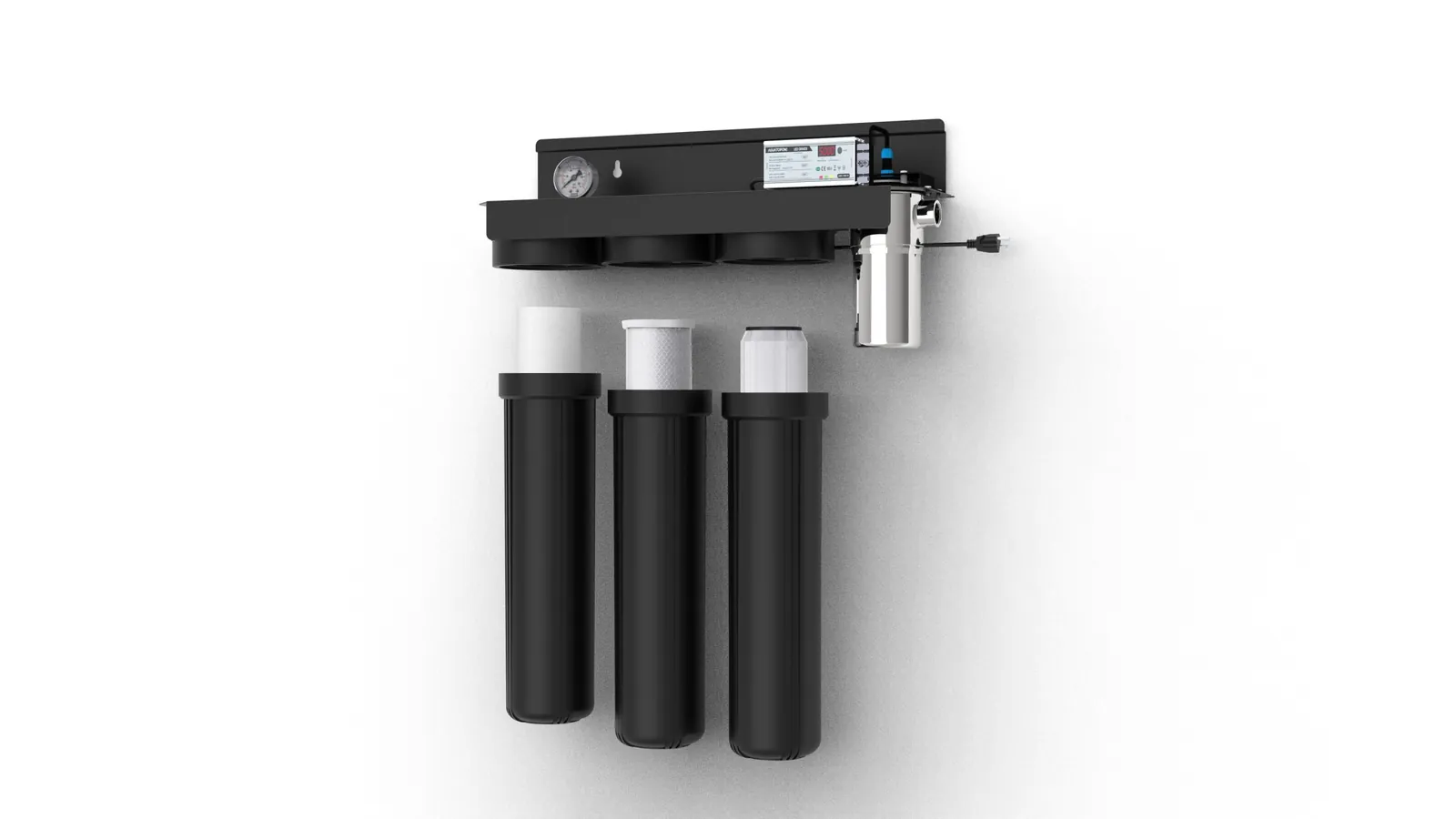
A whole-house UV water filter system can become a wall full of separate components. This Pennsylvania installation shows a more practical way to organize it. VPS-103 brings two cartridge positions, a pressure reference and a UVC LED stage onto one open frame, so the system is easier to understand at a glance and the main service points remain within reach. For a homeowner or installer, that clarity matters almost as much as the product specification.
VPS-103 system and sizing overview
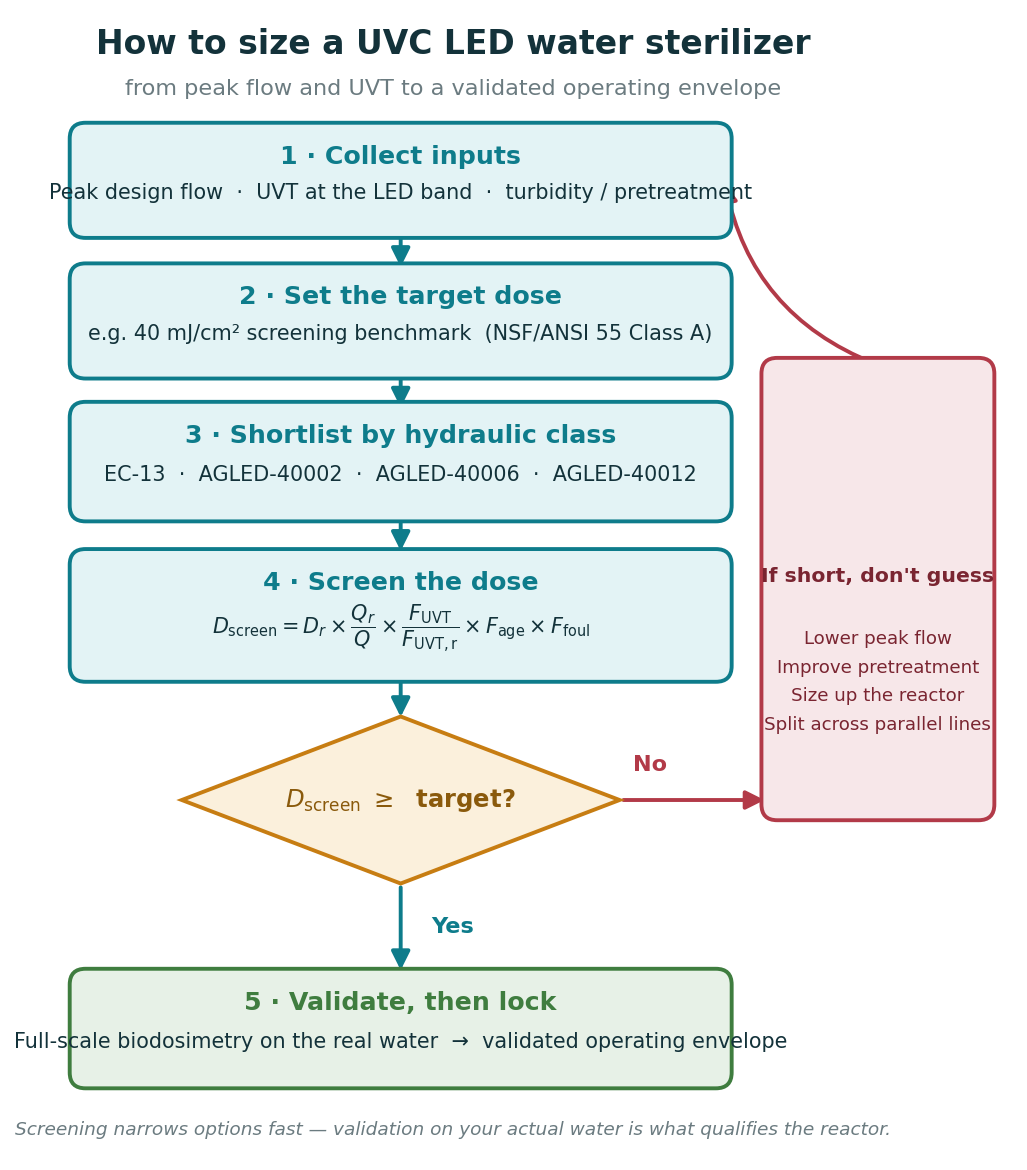
The buyer-facing value is simple: filtration, UVC LED treatment and the main check points are organized on one frame. Use the published figures below as a first sizing check, then match them with the water report, peak demand and installation space.
- System format
- 3 stages Two 10-inch filter positions + UVC LED
- 30 mJ/cm² flow
- 30 L/min About 8 GPM manual selection basis
- 40 mJ/cm² flow
- 23 L/min Dose-specific manual selection basis
- Inlet / outlet
- 1 inch Confirm site connection standard
- Operating pressure
- 10–100 PSI Review complete installed water path
- Open-frame size
- 540 × 215 × 570 mm Allow additional service clearance
- Electrical input
- 100–240 V AC 50/60 Hz
- UVC LED stage
- 50 W AGLED-40012 reactor platform
- Published inlet UVT
- >90% Test actual source water before selection
The need this layout answers
The buying question behind a system like this is usually not “How many pieces of equipment can we add?” It is “How do we deal with particles, taste or odour concerns and microbial control without creating a treatment room that is difficult to operate?”
That leads to three practical needs: a treatment train that can be selected from the actual water analysis, enough flow for the property’s busiest moments, and a layout that a homeowner or service technician can check without dismantling the plumbing. The Pennsylvania photo shows the physical answer: the cartridge housings, gauge, driver and UVC LED chamber are grouped together rather than scattered along the water line.
Why VPS-103 can make sense
VPS-103 is a three-stage, open-frame platform with two 10-inch cartridge positions followed by an AGLED-40012 UVC LED stage. It gives an installer one coordinated starting point while still allowing the cartridge media to be selected for the water and treatment objective.
The model is not chosen from the number of bathrooms alone. The current Owner’s Manual lists 30 L/min at a 30 mJ/cm² dose basis and 23 L/min at 40 mJ/cm². The right decision depends on peak simultaneous demand, UV transmittance, turbidity, iron, hardness, operating pressure and the complete upstream treatment train.
For the person living with the system, the benefit is easier to see: one wall-mounted assembly, a front-facing pressure gauge, a visible driver and clear access to the housings and UVC stage. It feels like one system rather than three unrelated products.
From the first question to a workable configuration
For a similar project, our conversation would not start with “VPS-103 or VPS-104?” We first ask what the water is like, what the household or facility is trying to solve and what the busiest water-use period looks like. Only then do we narrow the cartridge arrangement, UVC dose basis and model size.
- You show us the water and the spaceSend a recent water report, expected peak flow and a photo or sketch of the proposed installation area.
- We check the treatment logicWe review whether two cartridge stages are enough, what each stage is expected to do and whether the inlet water is suitable for UVC treatment.
- We confirm the installation detailsConnection standard, pressure, electrical supply, flow direction, isolation points and service clearance are reviewed before quotation.
- You get a clearer next stepIf VPS-103 fits, we define the model and document package. If it does not, we explain what needs to change instead of forcing the sale.
What the finished installation shows
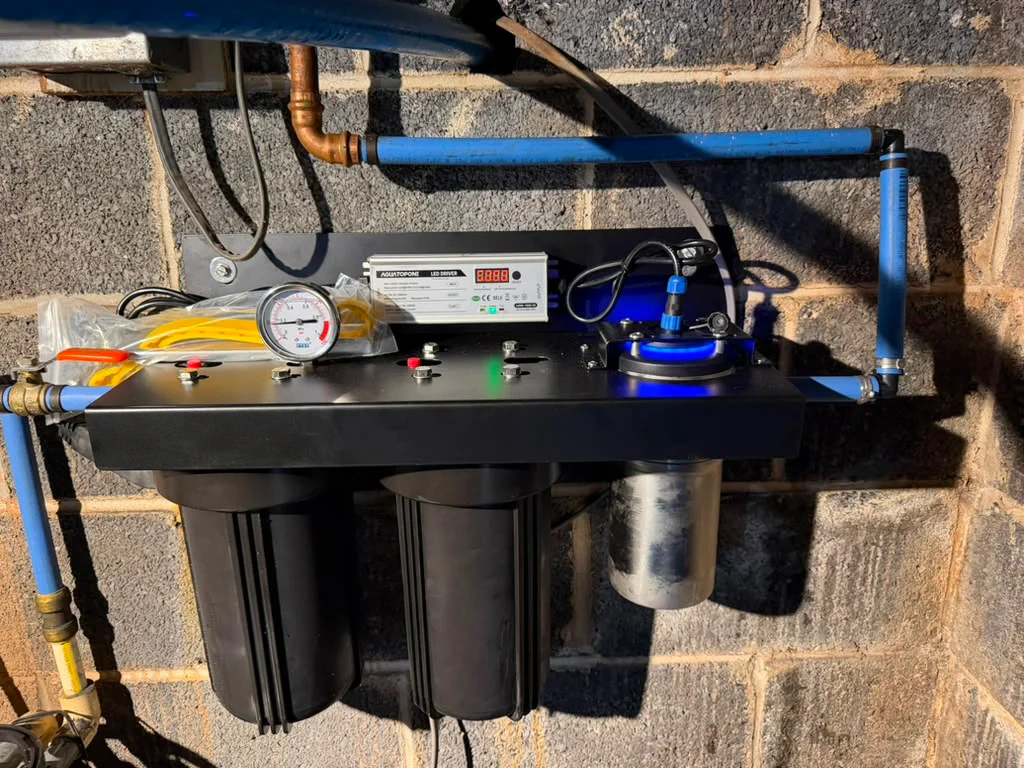 (opens in a new tab)
- One coordinated treatment zoneTwo cartridge housings and the stainless-steel UVC LED reactor are secured on the same wall-mounted frame.
- Checks stay visibleThe gauge and driver face forward, making routine pressure and operating-status checks easier.
- Service points remain reachableThe housings, UVC stage, fittings and isolation point can be seen without tracing equipment across the room.
- Works with the existing water lineThe open frame sits below the blue pipe route and keeps the main plumbing connections around the system visible.
Leave clear space below both housings, keep the gauge and driver easy to read, and make sure the isolation points and fittings remain reachable. A neat installation on day one should still be practical when the system needs routine service.
What this layout changes for the user
A homeowner does not need to remember which box does what every time the system is checked. The filtration positions are together, the UVC LED stage is identifiable and the driver is visible. A service visit can begin at one location, with fewer hidden connections to search for.
For an installer or distributor, the same layout makes the sales conversation easier. Instead of presenting filtration and UVC as disconnected items, the project can be explained as one treatment sequence: prepare the water first, apply the selected UVC dose, then keep the system accessible for routine checks and maintenance.
Practical outcome: the completed installation gives the user a compact, understandable and serviceable treatment area. For the next project, final performance should be confirmed during commissioning and sampling.
Would VPS-103 fit a similar project?
You want filtration and UVC on one frame
VPS-103 is a sensible starting point when two 10-inch cartridge positions plus a final UVC LED stage match the proposed treatment train.
Your peak flow fits the dose basis
Compare the real simultaneous demand with 30 L/min at 30 mJ/cm² or 23 L/min at 40 mJ/cm², then allow for pressure loss through the full installed route.
The inlet water is ready for UVC
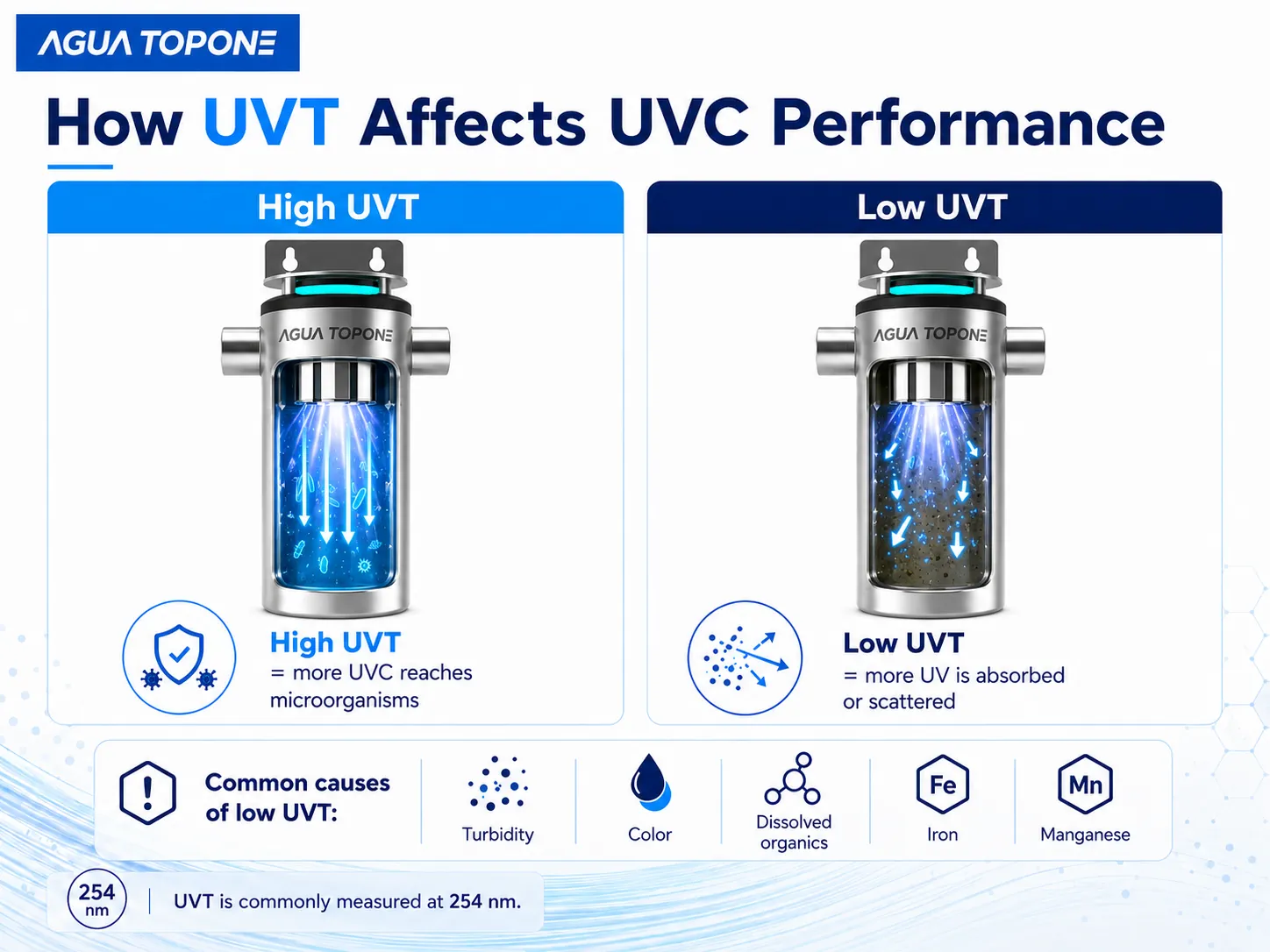
UVT, turbidity, iron, hardness and other water-quality conditions must be checked. UVC does not replace the pretreatment required to prepare the water.
You can leave room to service it
The wall area must allow access to the housings, driver, gauge, isolation points and UVC assembly. If the project needs 20-inch housings, four stages or a different flow class, another VPS configuration may fit better.
Product documents and selection references
Use these resources to review flow, installation conditions, model options and the AGLED-40012 UVC LED stage before quotation.
The manual lists dose-specific flow values, 10–100 PSI operating pressure, 1-inch connections, water-quality limits and service procedures for the VPS family.
Open Owner’s Manual ↗ (opens in a new tab)The report records >99.999% E. coli reduction at 50 L/min under the laboratory conditions stated in the report.
Open SGS report ↗ (opens in a new tab)The series page compares three- and four-stage layouts, 10- and 20-inch housings, dose-specific flows, dimensions and open-frame or covered variants.
Compare VPS models ↗ (opens in a new tab)How to use these documents: start with the VPS manual for sizing and installation checks, then use the series comparison and SGS report when reviewing the configuration with your technical or purchasing team.
What to send before requesting a quotation
You do not need a finished engineering drawing to begin. A useful first message can be short: tell us where the system will be used, attach the current water report and add a photo of the water line.
- Water source and treatment goalPrivate well, municipal supply, stored water or another source—and what you need the system to address.
- Water analysisUVT if available, turbidity, colour, iron, manganese, hardness and any microbiological result relevant to the project.
- Peak demand and pressureHighest simultaneous use, normal operating range, pump or tank details and pipe size.
- Installation photo or sketchShow the water route, available wall space, connection standard, electrical supply and where future service access can be left.
- Commercial requirementsDestination market, expected quantity and the technical or compliance documents your team needs.
We can then tell you whether VPS-103 is a realistic fit, whether a different VPS configuration (opens in a new tab) is more suitable, and which details still need confirmation. You can also review our VPS treatment-train guide (opens in a new tab), flow and UVT sizing guide (opens in a new tab) or broader point-of-entry applications (opens in a new tab). Installation and service documents are available through Support (opens in a new tab).