Is Your Tap Water Truly Safe? The Evolution of Deep UV LED Technology in European Drinking Water
Abstract
As global standards for water quality safety and environmental regulations become increasingly stringent, traditional drinking water disinfection technologies are undergoing an unprecedented paradigm shift. This white paper examines the current state of drinking water safety in Europe from a scholarly and industry-trend perspective, analyzing the evolution of Deep Ultraviolet (UVC) technology in two primary segments: Point-of-Use (POU) and Point-of-Entry (POE).
By comparing the specific challenges of Munich, Germany (representing urban POU scenarios) and the United Kingdom (representing rural Private Water Supply POE scenarios), this study evaluates the transition from low-pressure mercury lamps (uvc lamp) to Ultraviolet Light Emitting Diodes (UVC LED). Integrating the regulatory directives of the EU Drinking Water Directive (2020/2184) and the RoHS Directive(2011/65/EU), we provide a detailed analysis of uvc wavelength optimization, microbial inactivation kinetics, scaling mitigation, and Total Cost of Ownership (TCO).
Research indicates that UVC LED technology, with its mercury-free profile, instantaneous activation, and high efficacy against specific pathogens like Legionella and Cryptosporidium, is becoming the cornerstone of terminal water safety in Europe and beyond.
Chapter 1: Physico-Chemical Foundations and the Paradigm Shift in Disinfection
1.1 Biological Mechanism of UV Disinfection
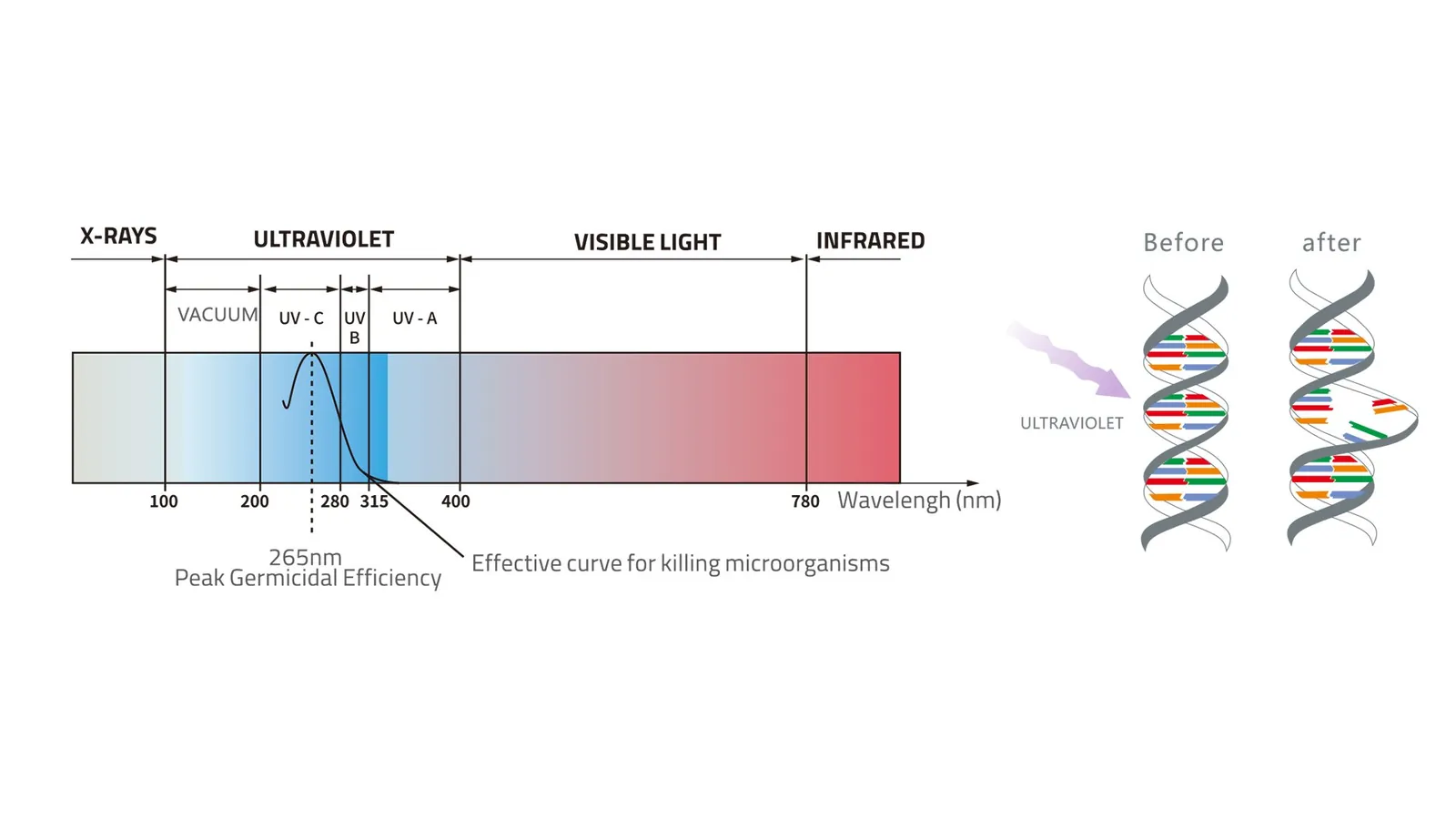
Ultraviolet disinfection is a physical process. It uses specific wavelengths to disrupt the genetic material of microorganisms. Within the UV spectrum, the Deep UV band (200 nm to 280 nm) provides the strongest germicidal effect.
UVC photons penetrate cell walls and damage nucleic acids. Specifically, pyrimidine bases absorb these photons and form covalent bonds. These “pyrimidine dimers” stop DNA polymerase activity. Consequently, the microorganism cannot replicate and becomes “inactive”.
1.2 Spectral Differences: Mercury Lamps vs. LEDs
For decades, the low-pressure mercury lamp (uvc lamp) was the industry standard. However, semiconductor advancements are now changing this landscape. The two sources differ fundamentally in their spectral output.
Low-Pressure Mercury Lamp (LP UV lamp):
This lamp excites mercury vapor to produce light at a fixed peak of 253.7 nm. While effective, this is not the optimal wavelength for DNA absorption.
UVC LED:
Conversely, manufacturers can tune the emission wavelength (uvc wavelength) of an LED. They typically set it between 260 nm and 280 nm.
Notably, the peak germicidal sensitivity for most pathogens resides near 265 nm. Therefore, an LED at 265 nm offers 20 to 30 higher efficiency than a mercury lamp.
| Technical Parameter | Conventional UV (Mercury) | Deep UVC LED | Impact Analysis |
| Core Wavelength | Fixed at 253.7 nm | Tunable (265-275 nm) | Better DNA alignment |
| Mercury Content | 5-200 mg | None (Mercury-free) | Full RoHS compliance |
| Startup Time | 30 sec to 2 min | Microsecond instant | Energy savings |
| Cycles | Limited life | Unlimited cycles | Ideal for POU flow |
| Operating Temp | 100-600℃ | Near process water | Reduced scaling |
Chapter 2: The European Regulatory Landscape
The Drinking Water Directive (EU) 2020/2184
At the core of European Union drinking water regulation is the revised Drinking Water Directive (DWD), which officially entered into force in January 2021.
Significantly, this directive introduced a comprehensive Risk-Based Approach to water safety, mandating that member states implement rigorous monitoring throughout the entire supply chain—extending from the initial point of abstraction to the final consumer tap.
Furthermore, the directive has specifically tightened control standards for emerging contaminants, with a focus on the following key areas:
- Microbiological Parameters: Beyond the standard monitoring of E. coli, the directive now mandates risk assessments for Legionella pneumophila to enhance biological safety.
- Chemical Parameters: Stricter regulatory limits have been established for per- and polyfluoroalkyl substances (PFAS), Bisphenol A, and critical heavy metals including lead, chromium, and copper.
- Material Contact Safety: To ensure systemic hygiene, the directive established a unified set of “European Positive Lists.” These lists stipulate mandatory hygiene standards for all materials in contact with drinking water, such as filter elements, valves, and the internal surfaces of UV reactors.
Chapter 3: In-Depth POU (Point-of-Use) Analysis: Munich, Germany
3.1 Munich Water: Alpine Quality vs. Terminal Challenges
Munich’s tap water (Munich tap water) is widely regarded as some of the highest quality urban water in Europe, sourced primarily from deep groundwater in the Alpine foothills.
However, even with excellent municipal treatment, “last-mile” challenges within building infrastructures pose significant risks.
3.1.1 Legacy Infrastructure and Secondary Contamination
In Munich’s historic districts, lead pipes remain in some older buildings. While German law limits lead in drinking water to 0.01 mg/L, concentrations can spike in stagnant water within these old systems. Additionally, the degradation of aging pipes has introduced concerns regarding microplastics and nanoplastics at the tap.
3.1.2 Legionella and Biofilm Proliferation
A defining characteristic of Munich’s water is its “high hardness” (approximately 16.6° dH), which facilitates limescale accumulation and provides a substrate for bacterial growth. In central hot water systems of residential complexes, Legionella pneumophila can rapidly multiply within biofilms if storage temperatures fall below 60°C.
Data indicates a Legionella prevalence of 12% in single-family homes with storage tanks and circulation pumps in Munich, with concentrations reaching up to 100,000 CFU/100ml. Since Legionella infection occurs primarily through aerosol inhalation (e.g., during showering), installing a UVC LED water sterilizer at POU terminals (faucets or showerheads) has become a vital preventative strategy.
3.2 UVC LED Advantages for POU
For urban environments like Munich, where taste (dechlorination) and microbial safety are prioritized, POU devices offer unique value:
- Mitigating the “Hot First Glass”: Traditional mercury lamps generate continuous heat. In hard water areas, this warms stagnant water in the reactor, leading to an unpleasantly warm first glass of water and accelerated scaling. UVC LED modules only activate during flow, eliminating this issue.
- Compact Integration: POU devices are often installed under sinks or within faucets. The micro-footprint of UVC LED allows for seamless integration into RO systems, coffee machines, and smart faucets.
- Targeted Kinetics: Against Legionella, UVC LED (uv-c germicidal lamp) systems operating at 265 nm provide significantly higher inactivation rates compared to traditional 254 nm mercury lamps.
Chapter 4: POE (Point-of-Entry) Analysis: UK Private Water
4.1 Vulnerability of UK Private Water Supplies (PWS)
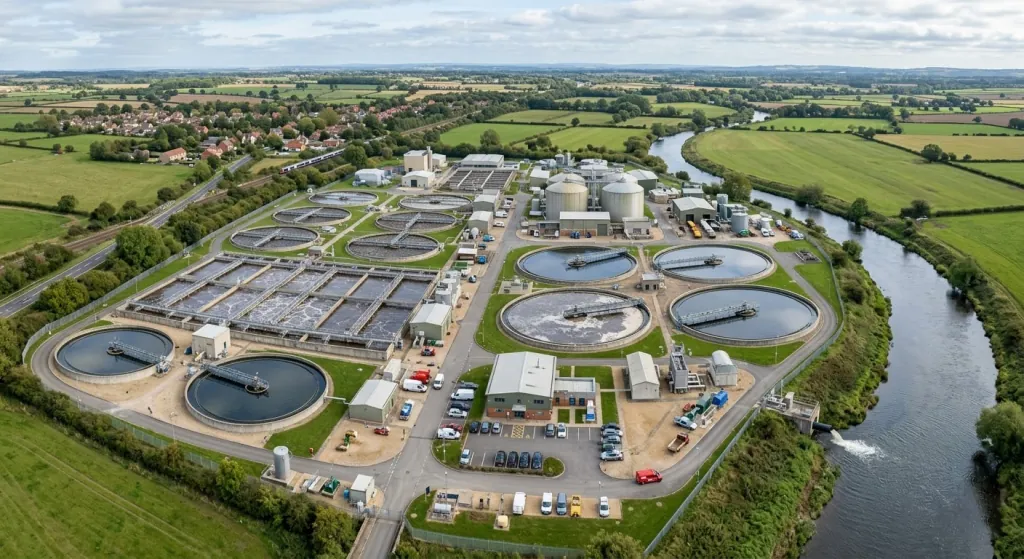
Unlike Germany’s centralized urban supply, a significant portion of the UK population (approx. 1.5%) relies on Private Water Supplies (PWS), including wells, boreholes, springs, and surface water.
These sources lack the centralized disinfection of municipal plants and are highly susceptible to runoff, agricultural activity, and septic leakage.
4.1.2 Failure Rates and Microbiological Risks
According to the 2024 Drinking Water Inspectorate (DWI) report, the failure rate for E. coli in English private supplies was 4.46%, compared to only 0.02% in the municipal network.
In Wales, the situation is more severe, with approximately 1 in 11 private supplies testing positive for fecal contamination.
| Contamination Parameter | Typical PWS Failure Rate | Health Risk Analysis |
| E. coli | 4.46% – 11.11% | Indicator of fecal pollution; gastrointestinal illness |
| Enterococci | 5.40% – 5.98% | High environmental resistance; long-term health risk |
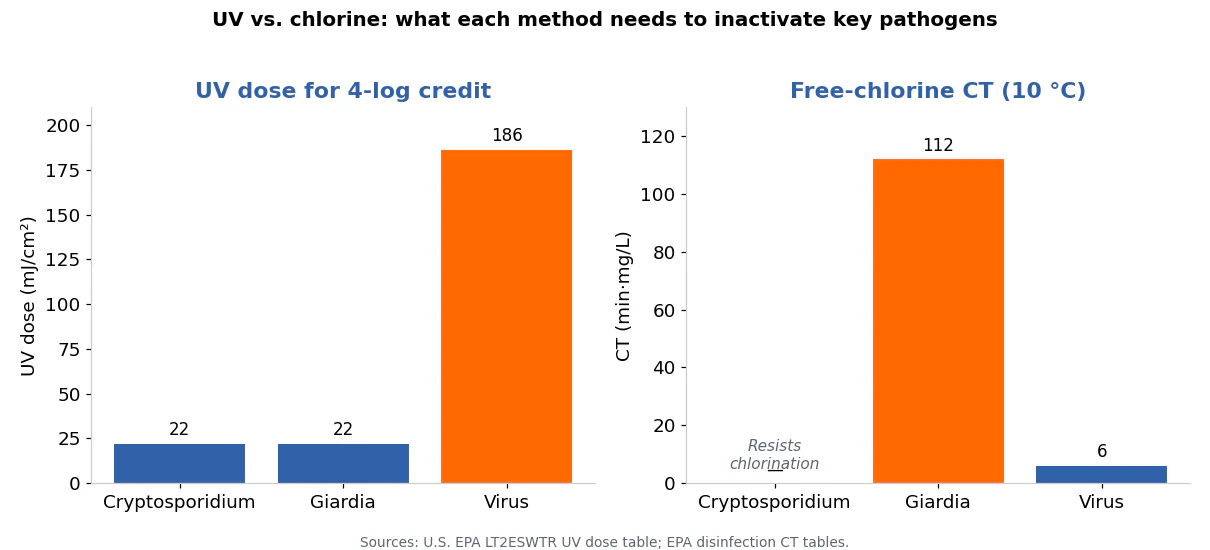
| Cryptosporidium | Difficult to quantify (High risk) | Chlorine-resistant; requires UV treatment |
| Heavy Metals (Fe/Mn) | 3.8% – 6.4% | Aesthetic issues; interferes with UV transmittance |
4.2 Technical Architecture of POE Systems and the Role of UVC LED
In the UK, POE systems serve as the primary defense for a household’s entire water supply. A standard UVC water filter configuration typically involves “Pre-filtration + UV Disinfection”.
In contrast, a full-spec configuration includes “Pre-filtration + Antiscalant + Water Filter Modules (PP + GAC + CTO + UF) + UV Sterilizer.”
4.2.1 The Solution for Cryptosporidium and Giardia
Cryptosporidium is the most persistent threat to UK private supplies. These parasites form oocysts with thick protective shells, rendering them almost immune to traditional chemical disinfectants like chlorine. However, they are highly sensitive to UV light.
Research shows that a UV dose of just 12 mJ/cm² can achieve a 3-log (99.9%) inactivation of Cryptosporidium. The 265 nm output of UVC LED is more effective at penetrating the oocyst wall and disrupting its replication logic.
4.2.2 Challenges: Turbidity and Scaling
UK PWS often contain high levels of suspended solids and metal ions (iron, manganese). This presents two challenges for POE UV installations:
- The Shadowing Effect: When turbidity exceeds 1 NTU, particles can shield bacteria from UV exposure.
- Quartz Sleeve Fouling: The heat from traditional UV lamps accelerates the precipitation of calcium and magnesium onto the quartz sleeve. This scale layer rapidly absorbs UV light, reducing efficacy.
With UVC LED technology, the absence of high-heat sources significantly slows scale formation.
Chapter 5: Scholarly Review of Disinfection Efficacy and Wavelength Optimization
5.1Microbial Inactivation Dose Model
In water engineering, disinfection performance is quantitatively measured by the Log Reduction Value (LRV).
LRV = log₁₀ (N₀ / Nₜ)
Where N₀ represents the initial microbial concentration and Nₜ represents the concentration after UVC treatment.
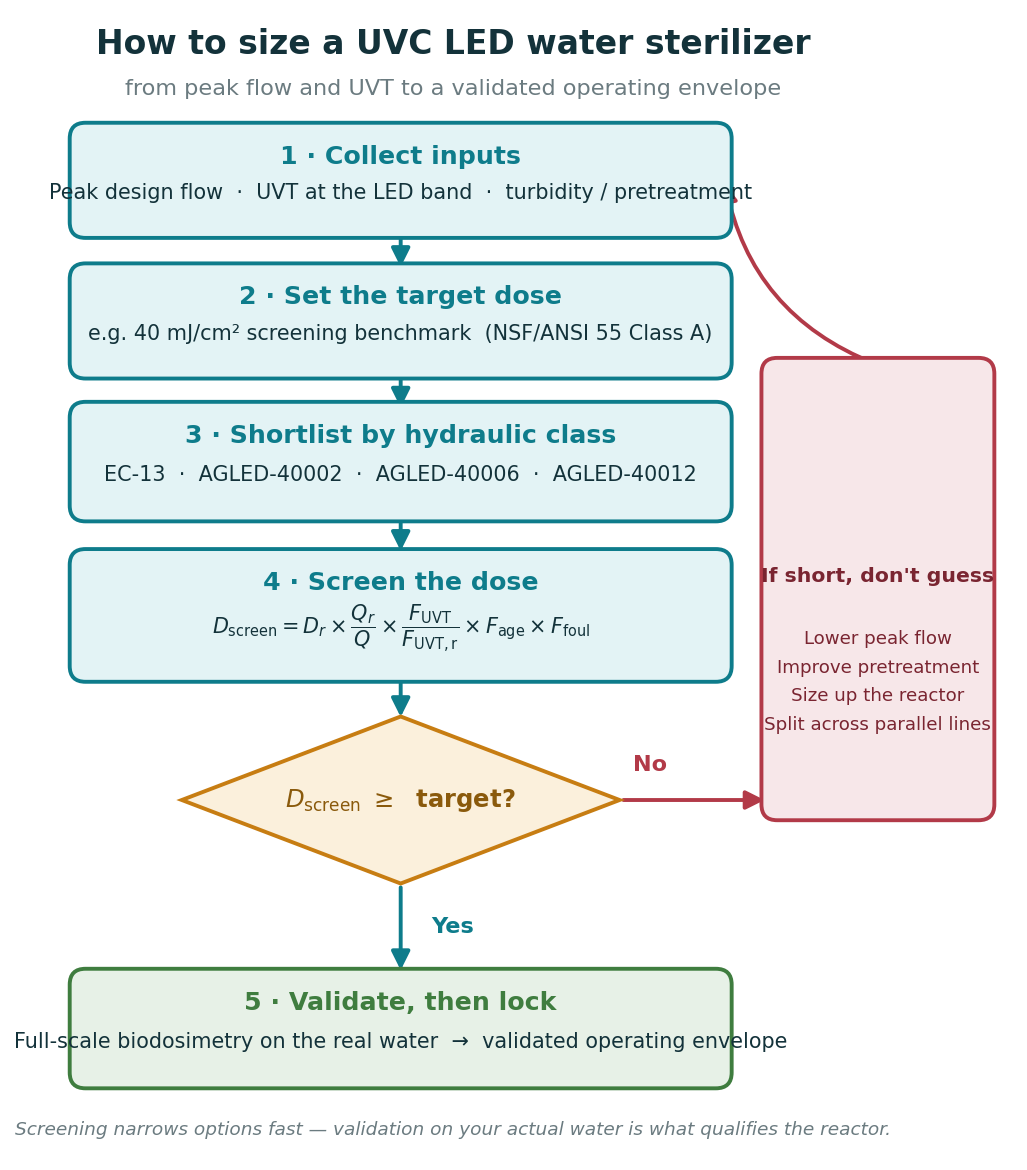
While a 4-log (99.99%) reduction is the standard industry benchmark, Agua Topone’s AGLED series is engineered to achieve a 5-log (99.999%) reduction. This provides a 10x higher safety margin, effectively reducing the surviving microbial load to 1/100,000th of the original level.
| Target Microorganism | 1-log (90%) | 2-log (99%) | 3-log (99.9%) | 4-log (99.99%) | 5-log (99.999%) |
| Escherichia coli (E. coli) | 3 – 5 | 6 – 8 | 10 – 15 | 20 – 30 | 35 – 45 |
| Legionella pneumophila | 2.5 – 4 | 5 – 8 | 9 – 16 | 20 – 30 | 35 – 50 |
| Poliovirus | 5 – 8 | 12 – 20 | 25 – 40 | 45 – 60 | 75 – 95 |
| Cryptosporidium oocysts | 1.5 – 3 | 5 – 8 | 12 – 15 | 20 – 25 | 30 – 40 |
| Giardia lamblia cysts | 1.5 – 2 | 4 – 6 | 8 – 11 | 15 – 20 | 25 – 35 |
| Salmonella Typhi | 1.8 – 2.5 | 4 – 5.5 | 7 – 9 | 12 – 18 | 22 – 30 |
The Performance Duel: 265 nm vs. 254 nm
The scholarly and engineering consensus identifies 265 nm as the “Golden Window” for UVC LED disinfection, offering superior kinetics compared to traditional 254 nm mercury lamps.
- Optimal Absorption Spectrum Matching: DNA/RNA shows peak absorption at approximately 260 nm, while critical proteins and enzymes peak at 280 nm. Our 265 nm LEDs precisely target both genetic material and cellular metabolic systems. This creates a synergistic germicidal effect that inactivates pathogens more rapidly and prevents cellular repair.
- Superior UV Transmittance (UVT): In many real-world POU/POE water sources, dissolved organic matter (DOM) aggressively absorbs shorter wavelengths. The 265–275 nm band penetrates deep into the water column more effectively. This ensures a more uniform light field within the reactor, eliminating “shadow zones” where bacteria might survive.
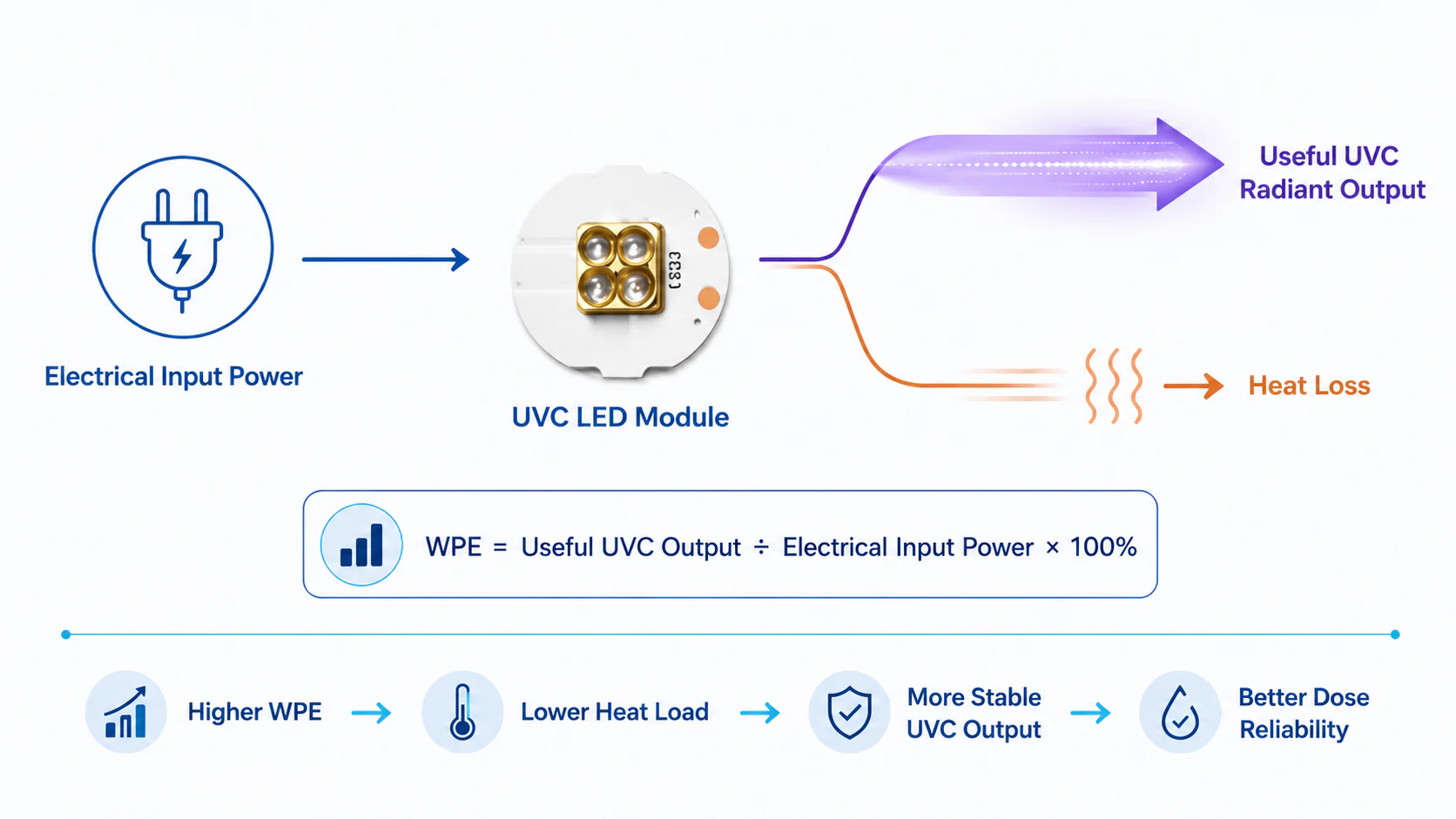
- Enhanced Log Reduction Kinetics: Due to the closer alignment with the germicidal action curve, 265 nm chips can achieve the 5-log threshold with lower power consumption and smaller reactor footprints compared to legacy mercury systems.
Chapter 6: Economic Evaluation: Total Cost of Ownership (TCO) Analysis
6.1 Initial Capital vs. Operational Expenditure
For European residential and commercial users, the primary hesitation in adopting UVC LED systems (uvc led lights) is the initial purchase price. Although LED chip prices are declining rapidly, they still command a premium over mass-produced mercury lamps.
However, over a 5 to 10-year lifecycle, the economic balance shifts decisively toward LEDs.
- Energy Reduction: In a typical residential POU setting, water is only flowing for less than 1 hour per day. While mercury lamps must remain in 24/7 standby (consuming 40W-100W), LEDs only activate during flow. Estimates suggest that LED systems can reduce electricity expenditures by 50% to 80%.
- Maintenance Costs: Mercury lamps require annual replacement (every 9,000 hours) and involve specialized disposal costs for hazardous waste. While UVC LED modules may have a rated “on-time” of 3,000-5,000 hours, their “calendar life” can extend to 10 years due to intermittent operation, eliminating frequent labor and consumable costs.
In countries like Germany and the UK, these savings result in a payback period of 2 to 4 years.
Chapter 7: Implementation Strategies: Selection and Maintenance
7.1 Selection Logic for Different Water Sources
1.Municipal Augmentation (e.g., Munich):
- Goal: Eliminate piping secondary contamination and inhibit Legionella.
- Recommendation: Compact POU UVC LED modules installed at faucets or showerheads.
- Key Consideration: Due to high hardness, select reactors with anti-scaling designs or schedule periodic citric acid descaling.
2.Private Water Security (e.g., Rural UK):
- Goal: Intercept E. coli and inactivate Cryptosporidium.
- Recommendation: High-flow POE system with replaceable modules, equipped with 5-micron pre-filtration to reduce turbidity, and can be integrated with multi-stage purifiers for further filtration.
- Key Consideration: Ensure equipment is third-party validated to guarantee reliable dosage.
Conclusion
This analysis confirms that UVC LED technology is not merely a passive substitute for mercury lamps necessitated by the RoHS Directive; it is an active revolution in disinfection efficiency, system integration, and environmental sustainability. In Munich, POU applications are filling the safety gap within building plumbing; in the UK, POE upgrades represent the only reliable path to reducing microbiological failure rates in private supplies.
As wavelength optimization standards converge on 265 nm and digital monitoring becomes ubiquitous, Deep UVC LED will play an indispensable role in Europe’s future water safety landscape, providing the highest level of physical “genetic protection” for every drop of water reaching the consumer.