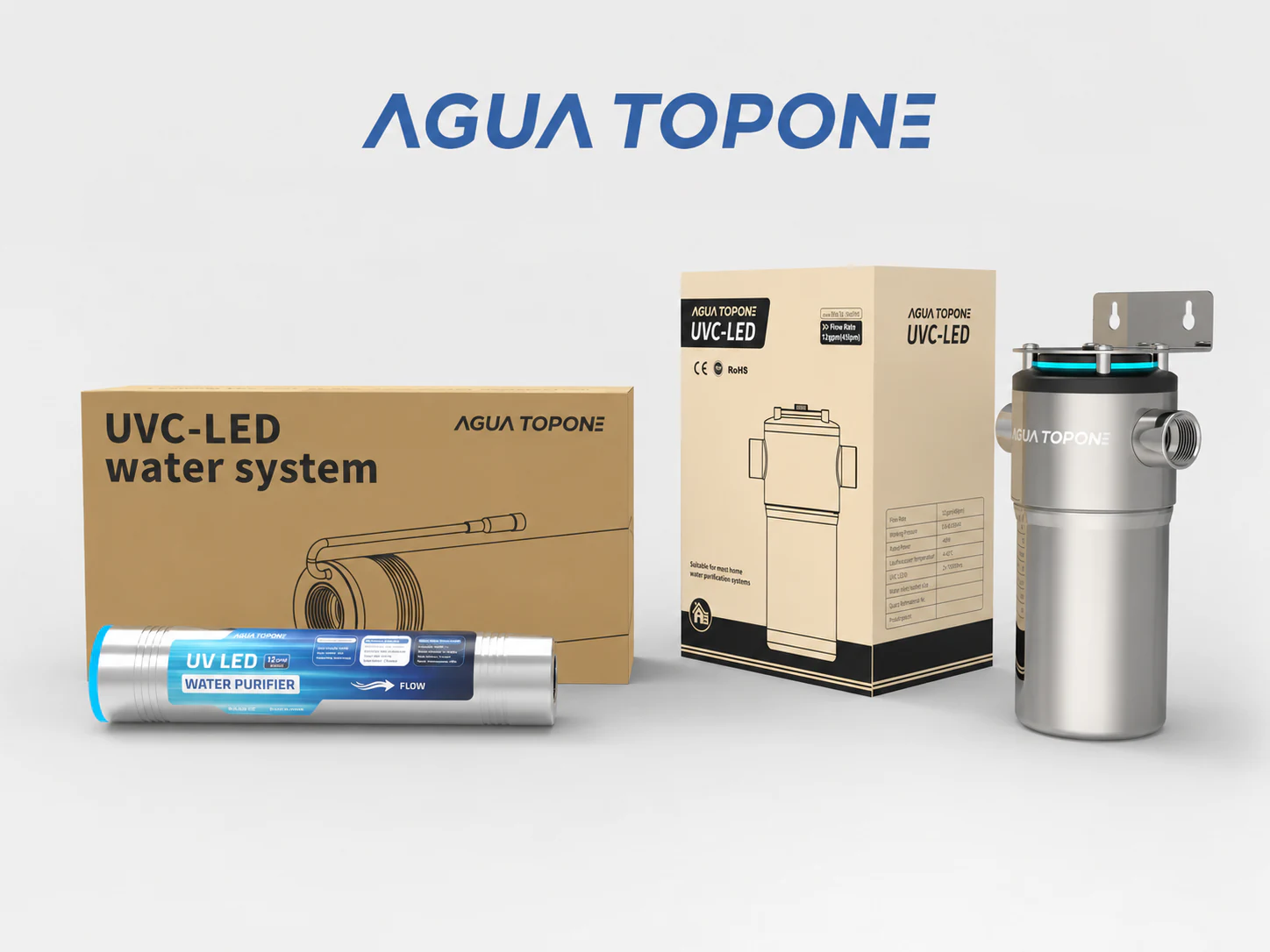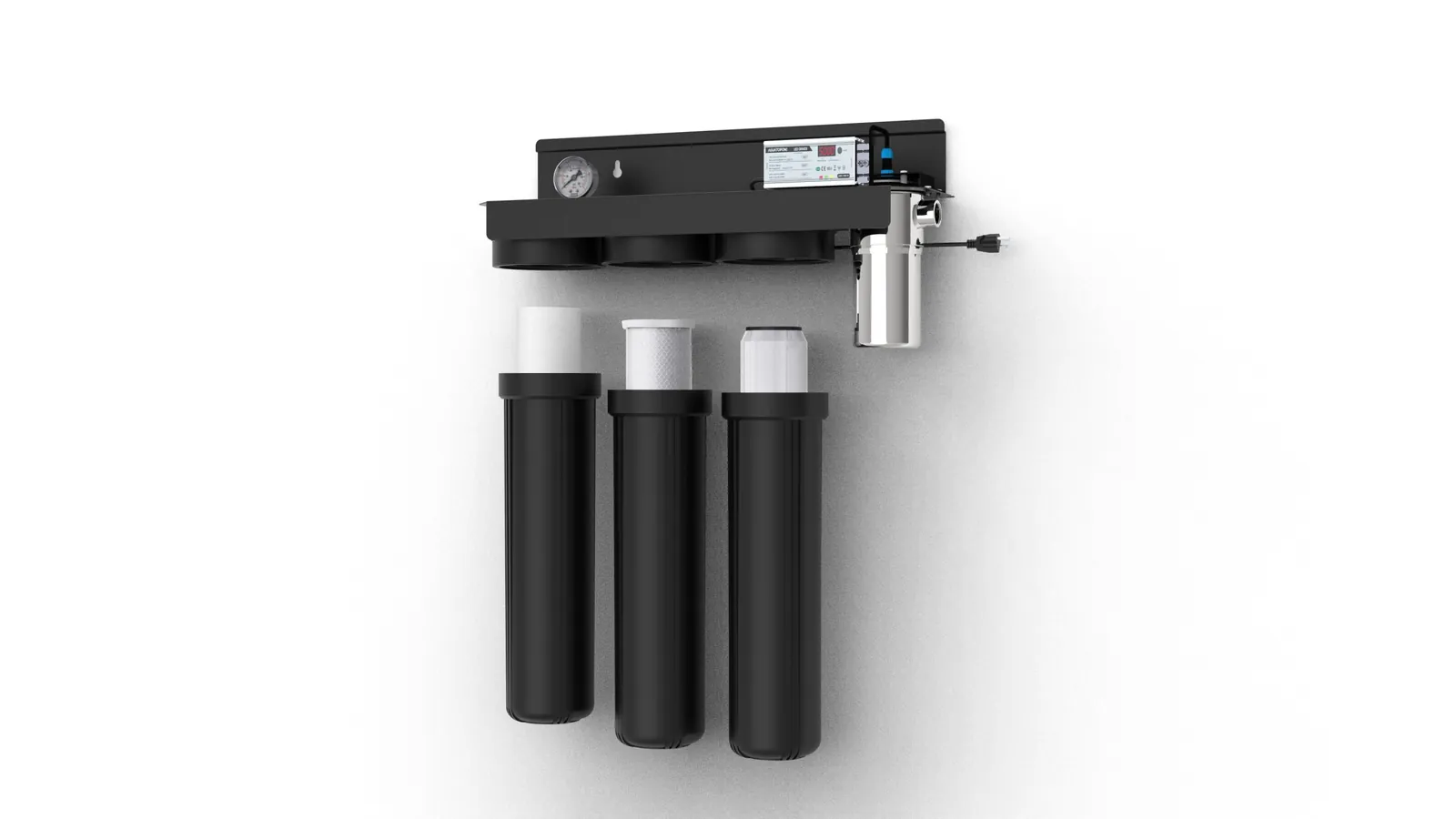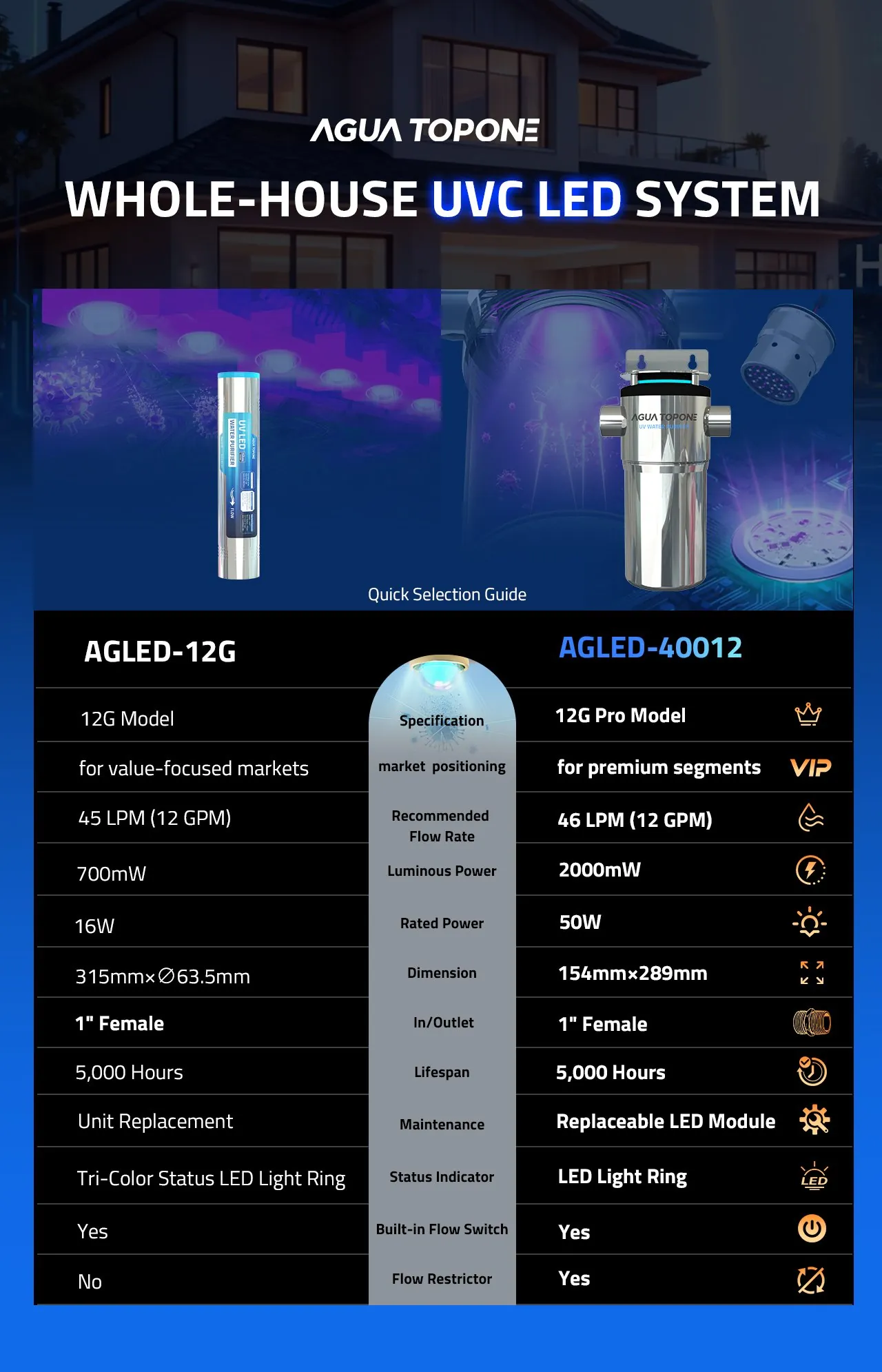
UVC LED Water Purification System Design: From GPS to VPS
What makes a UVC LED water purification system practical to own? Disinfection performance is essential, but customers also need equipment that fits the installation site, responds to water use and can be serviced without replacing the complete unit.

At Agua Topone, these requirements helped us expand our product range from standalone UV disinfection units to integrated water purification systems, including our GPS and VPS UVC LED systems. Customer questions about pretreatment, warm standing water, maintenance displays and replacement parts became specific engineering tasks.
The result is a product range shaped by practical use: integrating pretreatment, adapting controls to the light source, and making maintenance part of the system design from the start.
Why We Combined Pretreatment with UV Disinfection
Our starting point 20 years ago was a simple question: how could we disinfect water safely? Customers soon added another: what treatment should come before the UV unit?
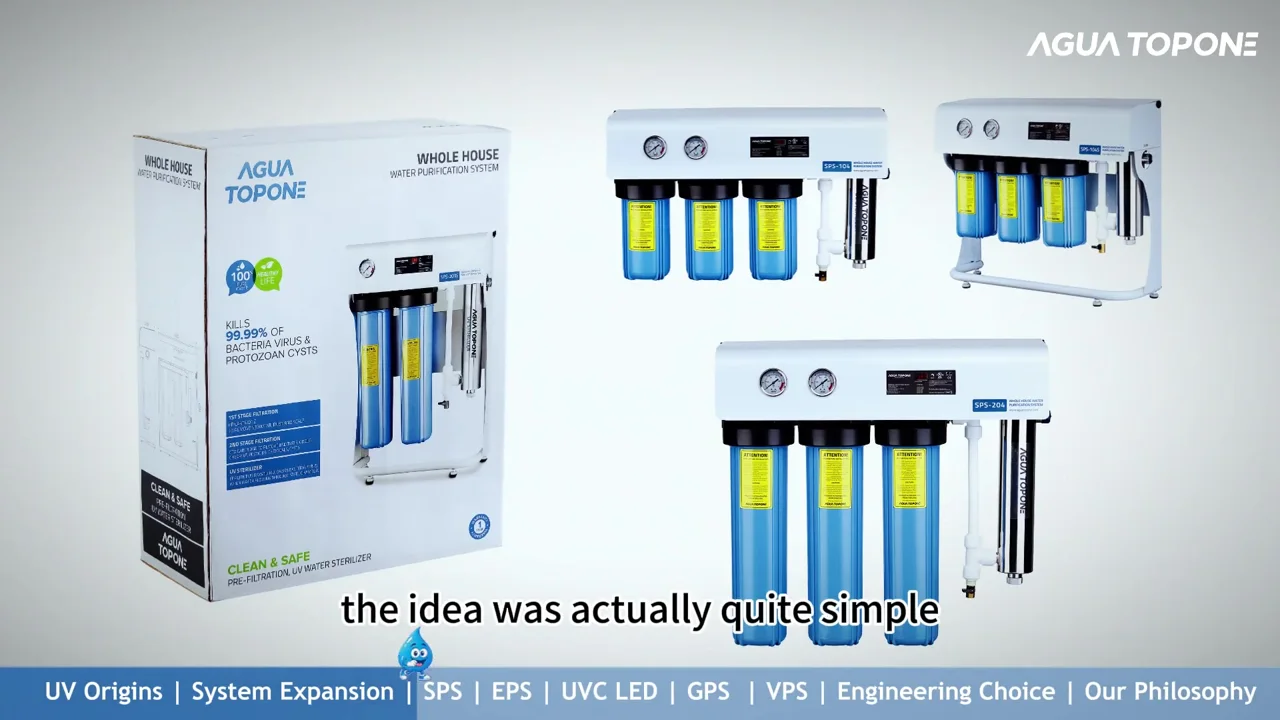
UV disinfection depends on the condition of the water entering the chamber. In our integrated treatment approach, the UV stage follows the necessary upstream treatment. Customer demand for pretreatment led us to add complete water purification systems alongside our standalone UV disinfection units.
The treatment stages have different jobs. Filtration prepares the water for the application; UVC LED water disinfection addresses microorganisms. The UV stage does not replace treatment for dissolved contaminants or other water-quality problems.
For a project buyer, the starting point is therefore the source water and treatment objective. The filter configuration and UV stage need to be selected together. Our VPS integrated UVC LED water purification systems explains the available integrated configurations.
What Warm Standing Water Taught Us About Flow Control
Some customers using our conventional UV systems noticed that the continuously operating lamp warmed water left in the chamber between periods of use. The lamp also consumed power while no water was flowing.
We introduced flow-based control, but the control strategy had to account for the lamp itself. Frequent switching can accelerate the aging of a conventional mercury lamp.
For this conventional UV lamp design, we introduced a ten-minute shutdown delay after water use stops. The lamp continues disinfecting water in the chamber during the delay, while avoiding an immediate shutdown after every use.
This experience established a principle that also guided our later LED development: controls need to suit both the light source and the way customers use water.
Why GPS Required More Than a Different Light Source
Interest from customers in Europe and North America encouraged us to integrate UVC LED into our purification systems. GPS was our first full integration of the technology into this system format.
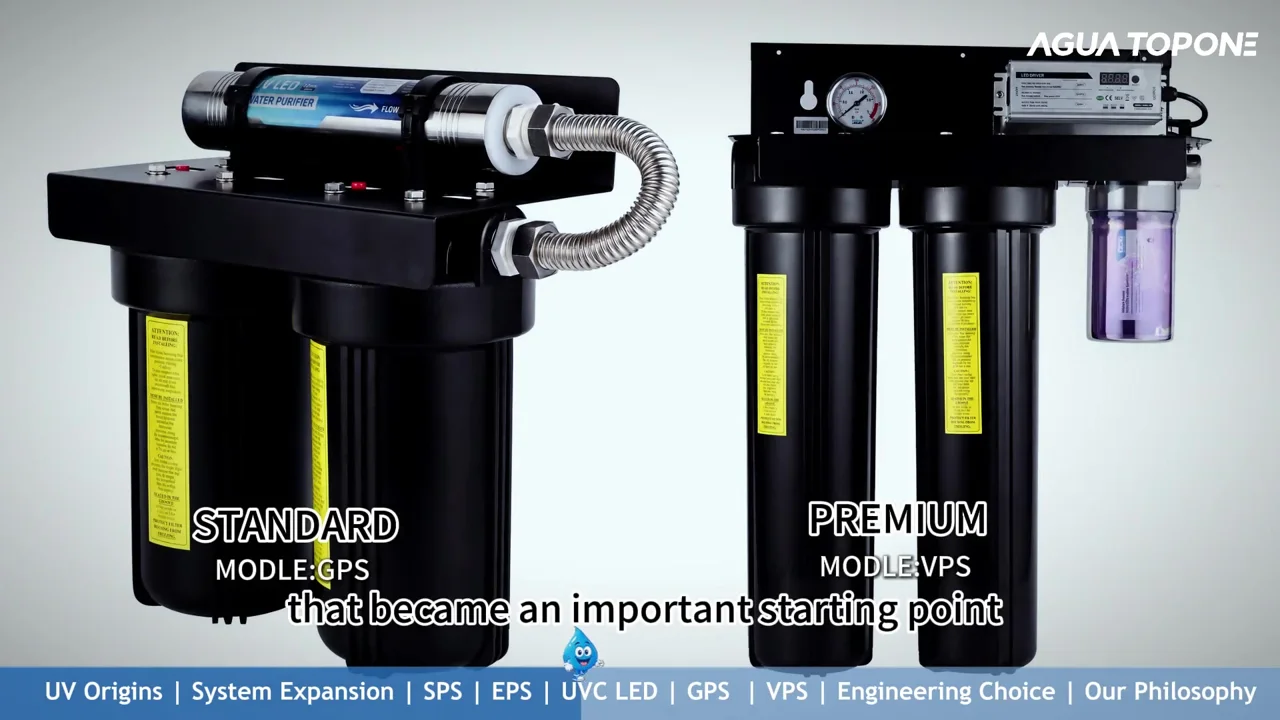
The change required us to reconsider four connected parts of the design:
- Heat dissipation: managing heat around the LED light source.
- Optical structure: directing the available UVC output into the treatment chamber.
- Water flow paths: coordinating how water passes through the illuminated region.
- Controls: operating the light source as part of the complete system.
Our engineers paid particular attention to the relationship between the light field and the flow field. For the buyer, this is why LED specifications alone do not describe the performance of a complete UVC LED water treatment system.
Our UVC LED disinfection designs have undergone professional third-party certification and testing, including biodosimetric validation. That validation supports disinfection performance comparable to conventional mercury lamp systems under the evaluated conditions.
Our testing and validation resources and certification documents help project teams review performance for the selected reactor and operating conditions.
How Customer Feedback Turned GPS Experience into VPS Improvements
Introducing LED technology did not remove customers’ practical concerns. They still wanted to know whether the equipment was operating, when maintenance was due and how it would be protected after installation.
GPS marked our first full integration of UVC LED into a complete water purification system. When we presented the GPS design to customers, their requests for service-life tracking, a replaceable module and protection from sunlight and rain helped shape the next stage of development. We combined that feedback with our engineering proposals and confirmed the solution with the customer before developing the VPS design.
A Clearer View of Operating Status and Service Life
Customers asked for a way to see the system’s status and remaining service life. We developed a visual driver display to make maintenance timing easier to understand.
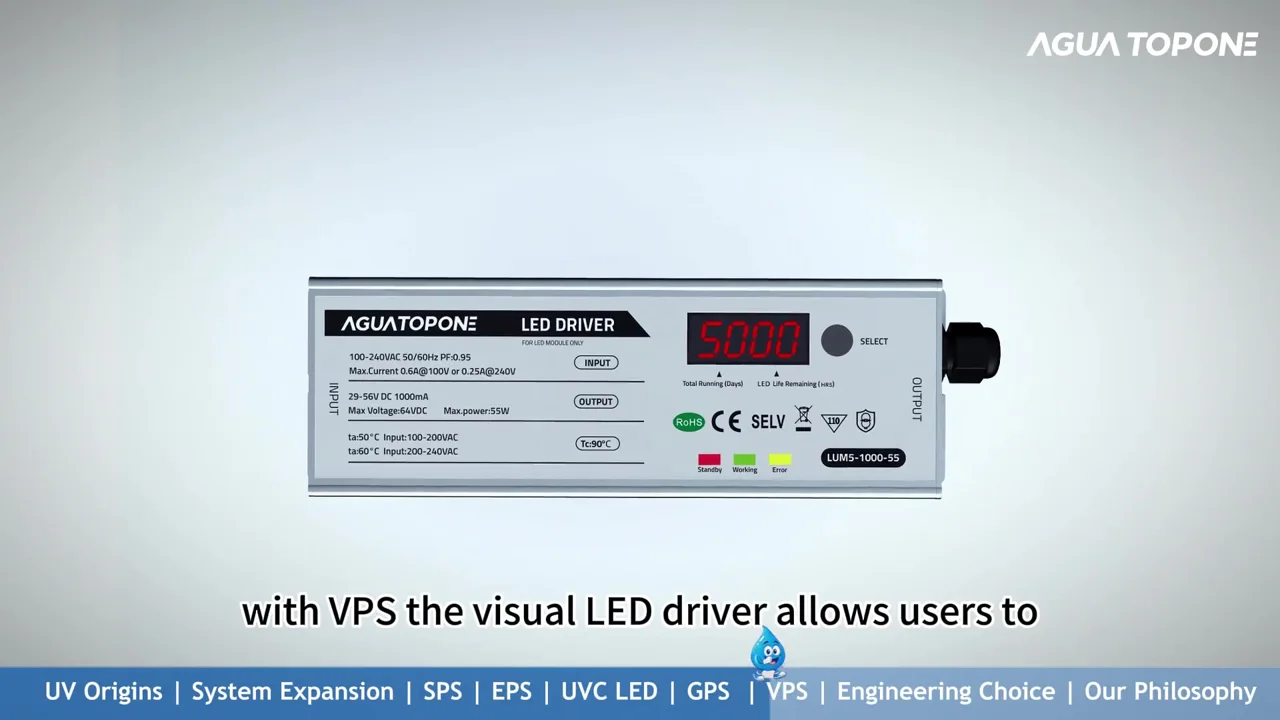
The display builds on our experience with countdown controls in conventional UV systems. We redesigned the controls to work with the LED light source, giving users a clearer view of operating status and when maintenance is due.
A Replaceable UVC LED Module
Customers also wanted to replace the light-source module without replacing the complete UVC LED disinfection unit.
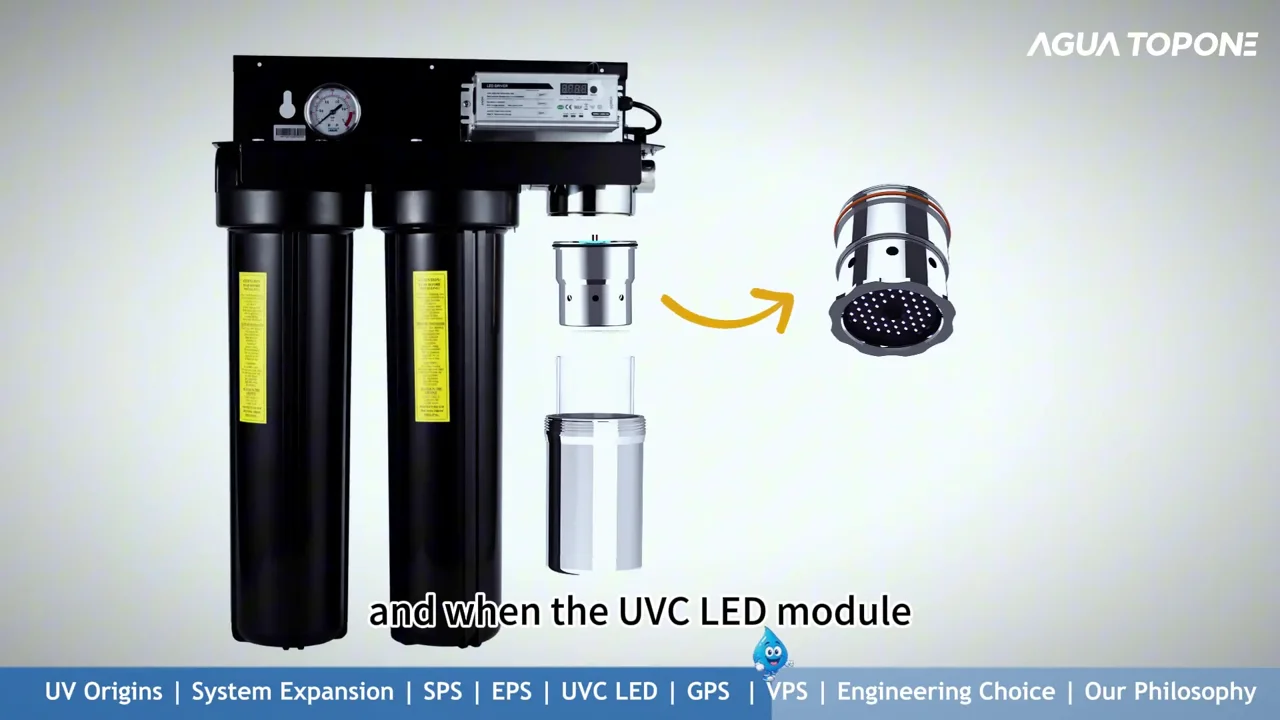
The replaceable design lets customers change the UVC LED light-source module without replacing the entire disinfection unit, reducing subsequent maintenance costs. It carries forward the service approach familiar from conventional UV lamp replacement, with a module and control design developed for UVC LED.
For distributors and service partners, this makes the replacement module a practical part of after-sales planning, alongside spare-parts availability and access for servicing.
Protection Suited to the Installation Location
Some projects place the system outdoors or beneath a simple shelter. Customers asked for protection from sunlight and rain, alongside easier maintenance.
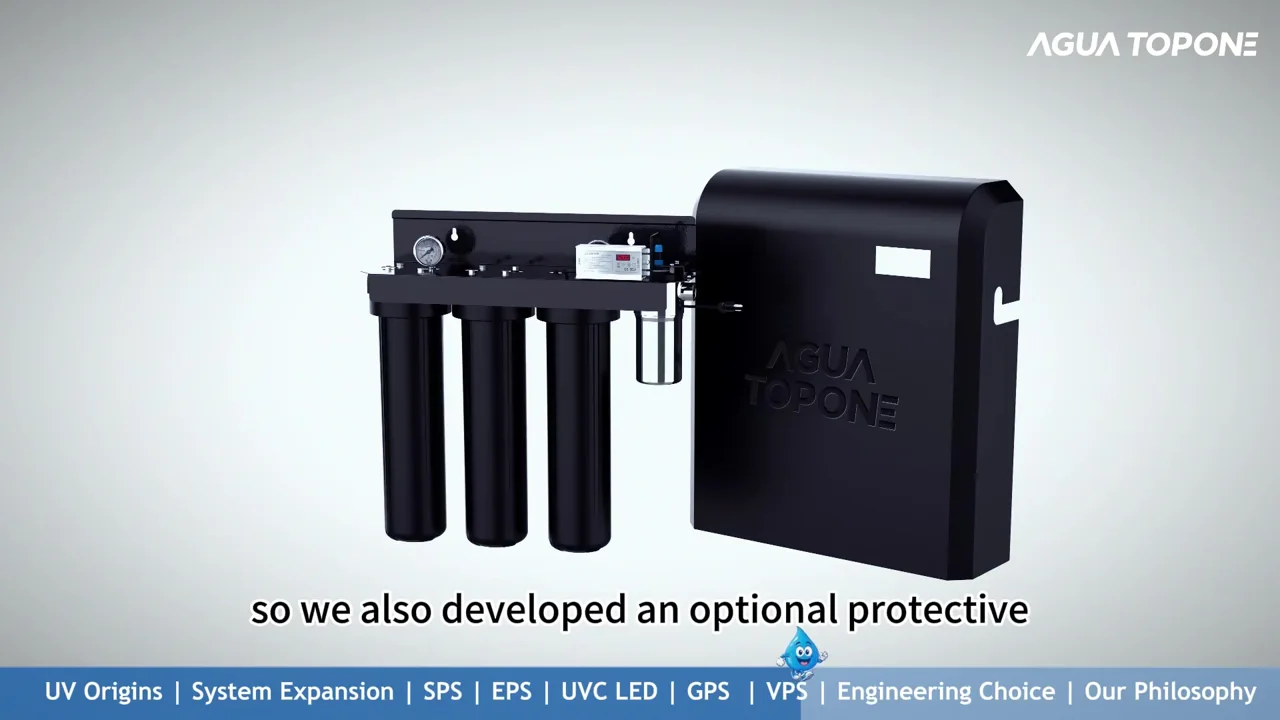
We developed an optional protective enclosure to help shield the system from sunlight and rain and extend its service life. The enclosure is selected to suit the system configuration, installation environment and access needed for maintenance.
What to Discuss Before Selecting a System
The development of GPS and VPS gives buyers a practical starting point for a project discussion:
| Project question | Why it affects the design |
|---|---|
| What is the water source, and what treatment is already installed? | Establishes the pretreatment and disinfection requirements. |
| What peak flow must the system handle? | Helps match the selected configuration to operating conditions. |
| Is water use continuous or intermittent? | Informs the discussion about controls and the light source. |
| Where will the equipment be installed? | Identifies protection, access and service-space needs. |
| Who will maintain it, and which parts need to be replaceable? | Connects module design, displays and spare parts to the service arrangement. |
| Which test results or certificates does the project require? | Allows the relevant documentation to be reviewed for the selected equipment. |
We continue to work with both conventional UV and UVC LED. Some customers value the maturity and stability of conventional lamp systems. Others prioritize a mercury-free light source, on-demand operation and the LED module maintenance approach.
We start with the core treatment functions, then select additional features for the application. Different installation environments and service needs call for different configurations. For OEM and ODM projects, we work with customers to define the controls, protection and maintenance features their equipment requires.
Discuss your water purification project with Agua Topone. Share your water source, peak flow, installation location and maintenance needs through our project inquiry page. These details help our team identify a suitable system and the configuration your application requires.
Agua Topone water purification system development interview · 7:39 · English subtitles embedded in the video. Watch on YouTube.