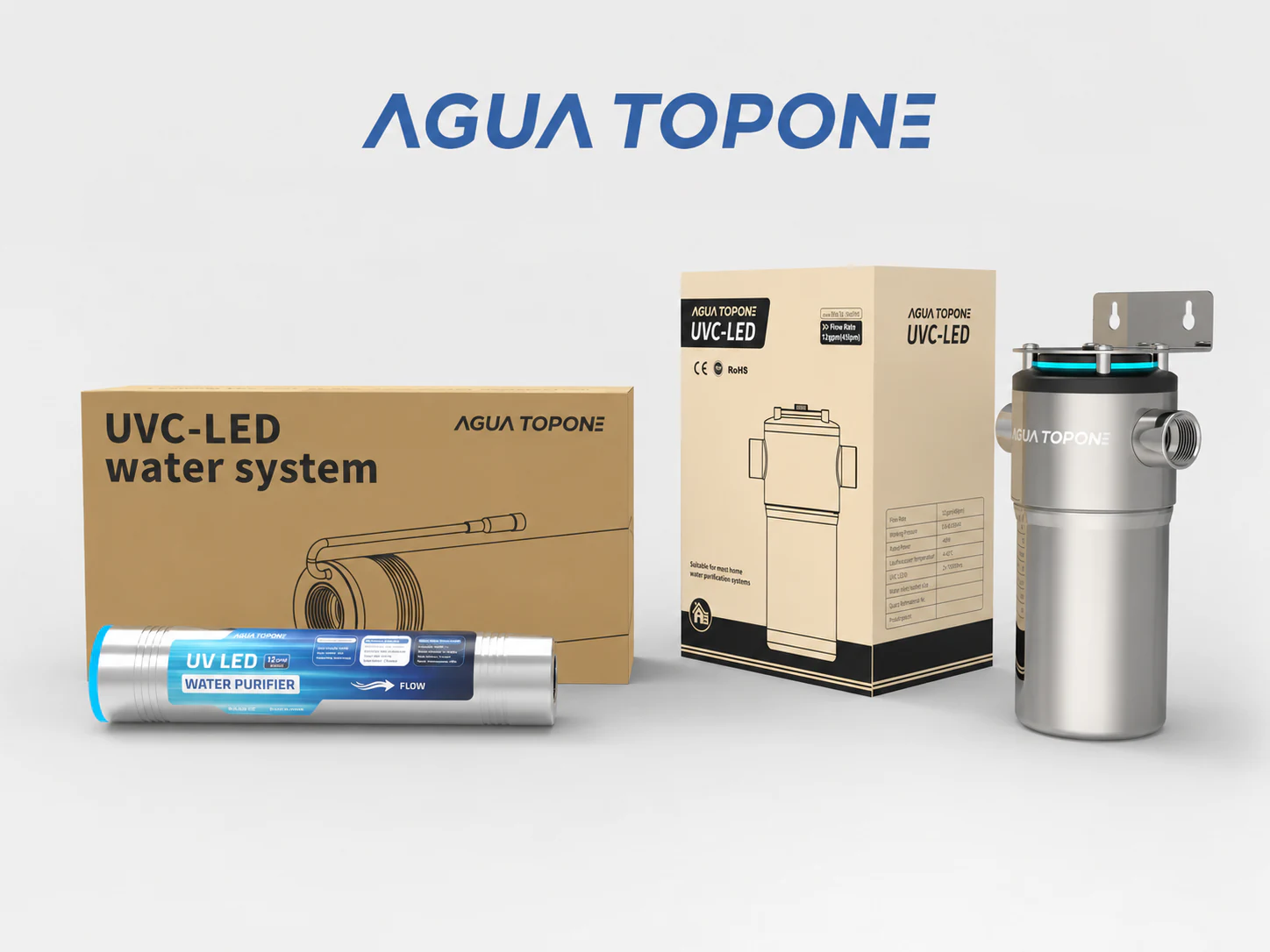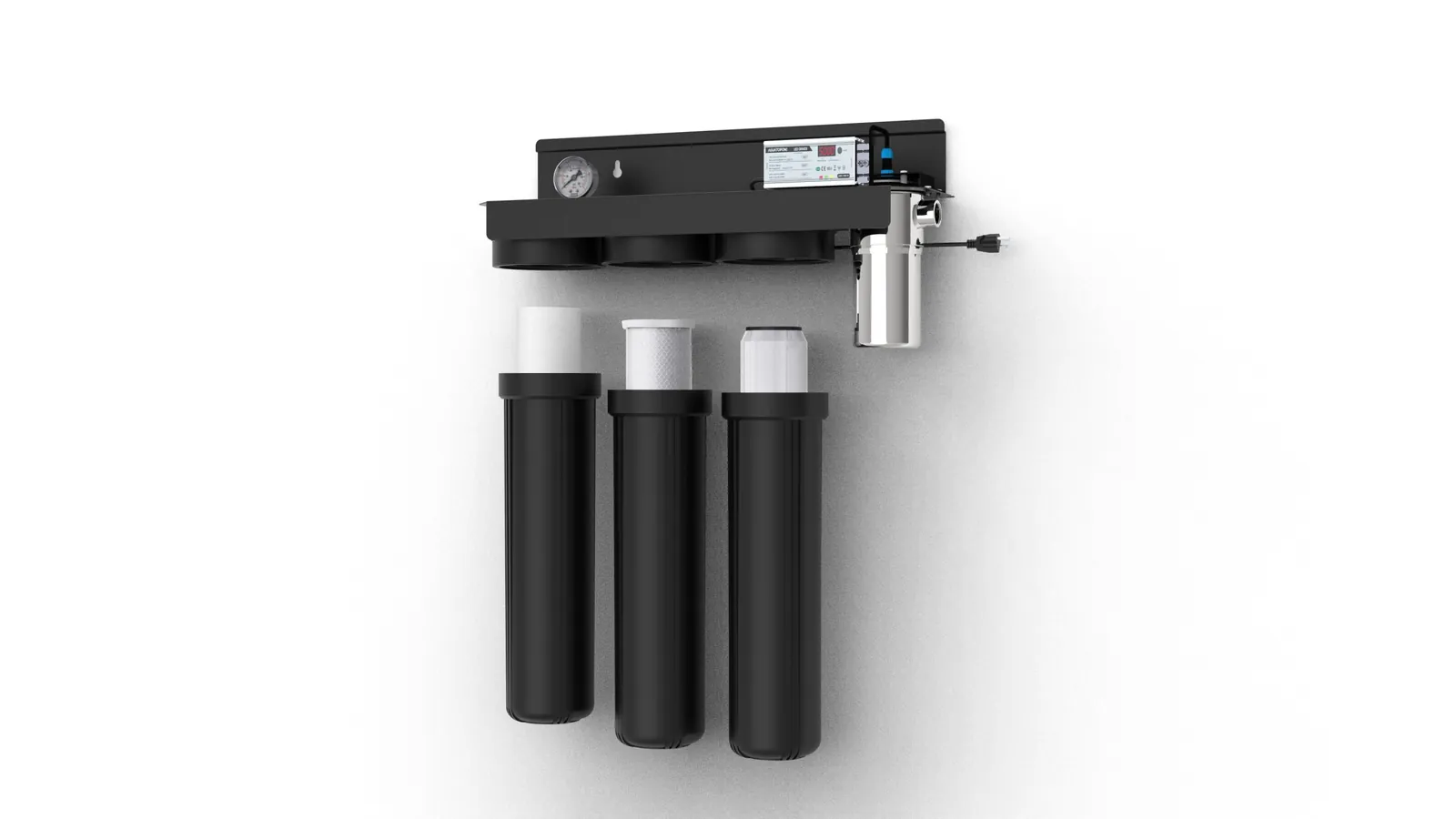
Which UVC LED Water Sterilizer Is Best: AGLED-12G or AGLED-40012?
The Evolution of High-Flow Water Disinfection in the Post-Mercury Era
A fundamental shift in sterilization technology currently reshapes the global water treatment landscape. For over a century, mercury-vapor lamps dominated the ultraviolet disinfection sector. Specifically, they served as the industry standard for pathogen inactivation. However, mercury usage poses significant environmental risks. For example, a broken lamp inside a water line causes severe secondary contamination. Consequently, the global push for environmental safety has heavily accelerated the search for sustainable, solid-state alternatives.
In this context, UVC Light Emitting Diodes (LEDs) emerge as the primary successor to traditional lamps. Historically, engineers limited UVC LEDs to low-flow applications. Nevertheless, Agua Topone engineers relentlessly innovated to overcome this barrier. As a result, they successfully introduced high-flow solutions capable of treating up to 12 gallons per minute (GPM).
Currently, two specific models garner substantial attention from residential developers and professional plumbers: the AGLED-12G and the AGLED-40012. Naturally, Agua Topone engineers both systems to handle modern whole-house (Point-of-Entry) high-flow requirements. However, different design philosophies, maintenance structures, and market positionings distinguish them.
Specifically, industry experts frequently describe the AGLED-12G as a value-focused, professional-grade solution. It prioritizes slim integration and high energy efficiency. In contrast, Agua Topone positions the AGLED-40012 as a premium flagship model. Notably, it represents the world’s first UVC LED sterilizer utilizing a fully replaceable LED module and an intelligent countdown ballast. Therefore, this report provides a comprehensive technical comparison of these two models. Ultimately, it assists stakeholders in selecting the most appropriate system for their specific infrastructure needs.
Architectural Design and Physical Specifications
When professionals evaluate a water treatment system, they often consider the physical footprint first. Furthermore, material composition matters greatly to installation professionals. Fortunately, both models utilize high-grade 304 stainless steel for their reactor housings. This choice ensures long-term durability and resists corrosion in humid environments. However, the dimensions and weights differ significantly because of their specific internal light sources and cooling requirements.
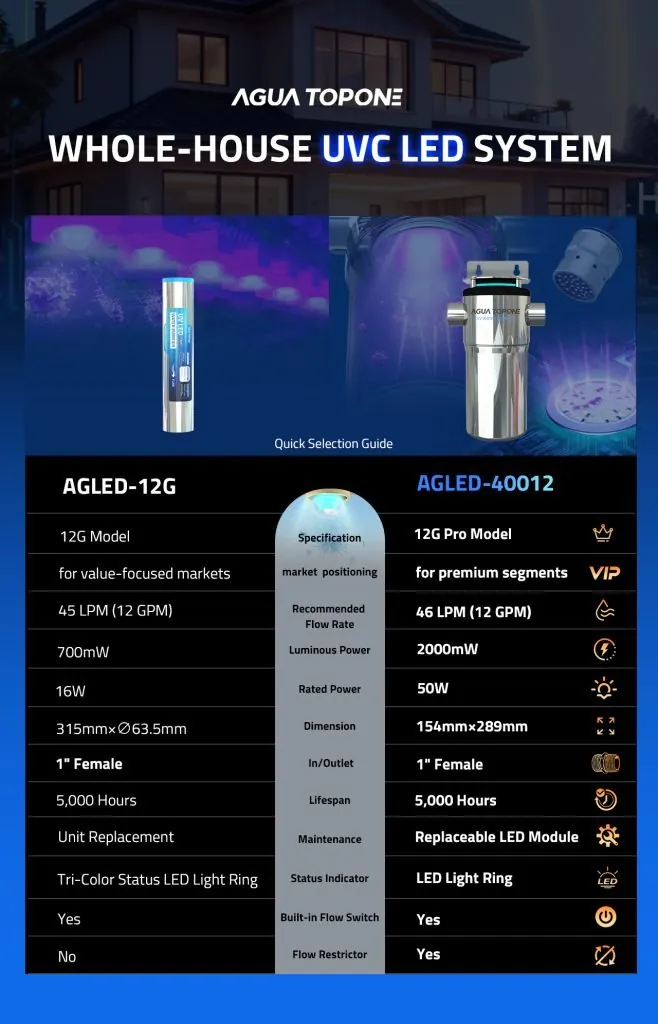
Specifically, a slim, elongated profile characterizes the AGLED-12G. It measures $315\text{mm} \times \varnothing63.5\text{mm}$. Consequently, this compact diameter perfectly suits tight installations. It also works well when installers must integrate the unit into a pre-existing filtration manifold. Additionally, weighing approximately 2.4 Kg, it provides a lightweight solution. Installers can easily manage it during the setup process.
Conversely, the AGLED-40012 features a more robust, “heavy-duty” construction. Its dimensions are $154\text{mm} \times 289\text{mm}$. Therefore, it presents a shorter but wider appearance compared to the 12G model. Furthermore, the 40012 model weighs significantly more at 3.1 Kg. This reflects the additional mass of its premium heat sinks. It also accounts for the complex housing required to support a replaceable module architecture. Ultimately, both units utilize standard 1-inch female threads for the inlet and outlet. This ensures seamless compatibility with common residential plumbing systems.
Physical and Structural Comparison Table
| Parameter | AGLED-12G (Value Model) | AGLED-40012 (Pro Model) |
| Market Segment | Value-focused markets | Premium segments |
| Housing Material | SUS304 Stainless Steel | SUS304 Stainless Steel |
| Dimensions | $315\text{mm} \times \varnothing63.5\text{mm}$ | $154\text{mm} \times 289\text{mm}$ |
| Net Weight | $2.4\text{ Kg}$ | $3.1\text{ Kg}$ |
| Inlet/Outlet Size | $1″\text{ Female}$ | $1″\text{ Female}$ |
| Max Pressure | $0.8\text{ MPa}$ | $0.8\text{ MPa}$ |
| Mounting Orientation | Vertical or Horizontal | Vertical |
Electrical Performance and Energy Efficiency
Undoubtedly, a critical advantage of UVC LED technology is its remarkable energy efficiency. It provides high-level disinfection with minimal power consumption. Unlike mercury lamps, which require high voltage to strike an arc, LEDs act as low-voltage DC devices. Engineers can precisely control them. Consequently, this distinction clearly reflects in the electrical specifications of both models.
Specifically, Agua Topone highly optimizes the AGLED-12G for energy efficiency. It rates at a power consumption of only 16W. Remarkably, a high-intensity LED array makes this low power draw possible. It focuses luminous power strictly on the 270-280nm germicidal range. Therefore, off-grid homeowners strongly prefer the AGLED-12G. It creates a minimal impact on solar-powered battery storage systems.
In contrast, the AGLED-40012 operates at a higher rated power of 50W. The system utilizes this increased power to drive a robust luminous output of 2000mW. This vastly exceeds the 500mW luminous power of the 12G model. Accordingly, Agua Topone intends the AGLED-40012 for challenging applications. It handles water with lower UV Transmittance (UVT) or higher microbial loads. Notwithstanding the higher power draw, the system remains significantly more energy-efficient than traditional mercury systems. Traditional systems often consume between 80W and 120W.
Electrical Specification Matrix
| Parameter | AGLED-12G | AGLED-40012 |
| Rated Power | $16\text{W}$ | $50\text{W}$ |
| Luminous Power (UVC) | $500\text{mW}$ | $2000\text{mW}$ |
| Input Voltage | $24\text{VDC}$ | $100\text{–}240\text{VAC}$ |
| Operating Mode | Instant-On Flow Activated | Instant-On Flow Activated |
| Standby Power | $\leq1.8\text{W}$ | Integrated Smart Sensing |
| Peak Wavelength | $270\text{–}280\text{ nm}$ | $270\text{–}280\text{ nm}$ |
The World’s First Modular Replacement System
Perhaps, the maintenance philosophy represents the most significant difference between these two models. In the early years, the “single-use” nature of reactors created a primary barrier to UVC LED adoption. Because manufacturers integrated the LEDs directly into the housing, users had to discard the entire unit upon failure. Fortunately, the AGLED-40012 directly resolves this challenge.
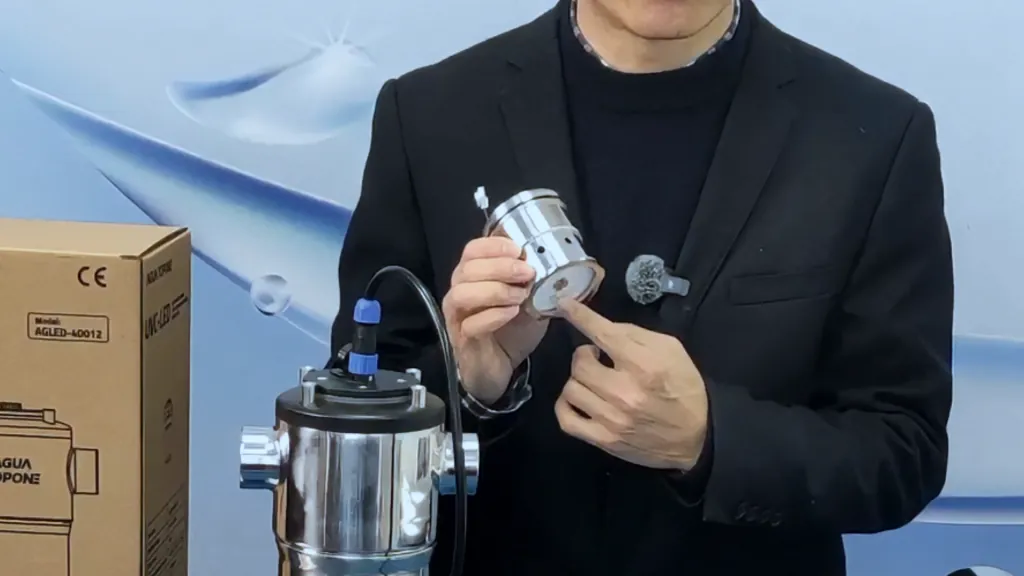
Specifically, the industry celebrates the AGLED-40012 as the world’s first modular UVC LED water sterilizer. It features a detachable and replaceable LED module. Agua Topone achieves this innovation by housing the electronic light source in a separate, quick-release cartridge. Eventually, the module reaches its $L_{70}$ lifespan. This typically occurs after 5,000 hours of active operation. At that point, the homeowner can simply swap out the module without touching the plumbing. Impressively, professionals complete this tool-free replacement in just 90 seconds. This improves maintenance efficiency by more than $80\%$. Furthermore, this approach lowers the long-term cost of ownership and actively supports circular economy principles.
Conversely, Agua Topone designs the AGLED-12G as a “unit replacement” system. Admittedly, its initial LED lifespan is 5,000 hours (L70). It achieves this through a lower-power driving configuration and advanced thermal management. However, once those LEDs deplete, the user must replace the entire unit. Therefore, this design perfectly suits high-volume, value-focused markets. In these markets, the initial capital expenditure (CAPEX) outweighs long-term modular flexibility.
Microbiological Efficacy and SGS Validation
Fundamentally, the primary function of any UV sterilizer involves pathogen inactivation. This includes destroying bacteria like Escherichia coli and various waterborne viruses. Consequently, independent laboratories subjected both the AGLED-12G and AGLED-40012 to rigorous third-party testing.
According to SGS certification reports, the AGLED-12G achieves a $99.999\%$ (5-log) reduction of E. coli at its rated flow rate of 12 GPM (45 LPM). Furthermore, it achieves this performance using high-intensity UVC LEDs. These LEDs emit photons at a peak wavelength of approximately 270nm to 280nm. Crucially, this specific range maximizes DNA and RNA absorption.
Similarly, the AGLED-40012 delivers an outstanding $99.999\%$ sterilization rate. Independent SGS and CE certifications completely verify this exact performance. To ensure consistent results, Agua Topone equips the AGLED-40012 with an integrated flow restrictor. This component remains crucial because it prevents the water from moving too quickly. It guarantees that every pathogen receives the required UV dose. Scientifically, the following formula represents the relationship between dose and flow:
$$Dose (\text{mJ/cm}^2) = \frac{UV \text{ Intensity } (\text{mW/cm}^2) \times \text{Exposure Time (s)}}{Flow \text{ Factor}}$$
By utilizing a flow limiting valve, the system guarantees sufficient exposure time. It easily delivers a $40\text{ mJ/cm}^2$ dose at 12 GPM for high-level disinfection.
Sterilization Performance Summary
| Model | Target Pathogen | Reduction Rate | Certified By |
| AGLED-12G | E. coli | $99.999\%$ | SGS |
| AGLED-40012 | E. coli | $99.999\%$ | SGS |
| AGLED-40012 | General Bacteria | $99.999\%$ | CE / SGS |
| AGLED-12G | Virus / Pathogens | High-Log Reduction | Lab Verified |
The Seven Pillars of Agua Topone UVC LED Technology
Ultimately, chance does not create the reliability of these systems. Instead, advanced materials science builds the foundation. Agua Topone identifies seven key engineering pillars integrated into both platforms.
- Scientific Annealing: During manufacturing, engineers utilize a specialized annealing technique. This reduces internal structural stress within the LED chips and prevents micro-cracks.
- Thickened Electrodes: Technicians reinforce the chips with thickened Gold-Tin (AuSn) alloy electrodes ($\geq5\mu\text{m}$). This enhances the eutectic bond and ensures superior thermal transfer.
- Aluminum Nitride (AlN) Ceramic Base: Instead of standard substrates, the design utilizes an AlN ceramic base. It rapidly draws heat away from the LED junction.
- Expanded Cooling Architecture: The package design features an enlarged backside cooling area. This facilitates active heat dissipation through the stainless steel housing.
- Vacuum-Sealed Protection: To prevent moisture erosion, technicians cure the LEDs in a vacuum environment. They also reinforce them with a double-layer silicone barrier.
- Dual-Coated Sapphire Lens: Unlike standard quartz, Agua Topone utilizes high-grade sapphire. Plated with dual-sided anti-reflective coatings, it boosts UVC transmittance to over $98\%$.
- Plasma Surface Cleaning: Finally, chip-level plasma cleaning technology ensures micron-level surface purity. This creates a stronger interface for wire bonding.
Smart Sensing and User Interface Comparisons
In modern smart homes, consumers increasingly demand clear status monitoring. Therefore, both models incorporate intelligent feedback mechanisms.
Specifically, Agua Topone equips the AGLED-12G with a tri-color status LED light ring. This visual indicator provides “at-a-glance” status updates. When the system sits in standby mode, it glows white. Once the flow switch detects water, the ring turns blue. This confirms active disinfection. If the system detects a failure, the ring turns red. This simple interface perfectly suits residential utility rooms.
Conversely, the AGLED-40012 elevates this experience using an intelligent countdown lifetime ballast. In addition to a light ring, the system provides a real-time countdown of the module’s remaining lifespan. Consequently, it eliminates maintenance guesswork. When the remaining life falls below 24 hours, the system triggers an audible alarm and a flashing red indicator. This ensures the user has ample time to order a replacement module.
Operational Economics and Long-Term Lifecycle Analysis
When evaluating the total cost of ownership (TCO), a nuanced picture emerges. First, the AGLED-12G represents a lower initial investment. This makes it highly attractive for value-focused residential upgrades. However, because it operates as a unit replacement system, the second ownership cycle requires purchasing a complete new reactor.
In contrast, the AGLED-40012 requires a higher initial capital expenditure. Nevertheless, it delivers significantly lower operating and maintenance (O&M) costs over a ten-year horizon. Because the user only replaces the LED module, subsequent maintenance costs drop dramatically. Furthermore, the powerful 50W output reduces the frequency of pre-filtration maintenance.
Lifecycle Cost Comparison Table (Estimated over 10 Years)
| Cost Component | AGLED-12G (Unit Replacement) | AGLED-40012 (Modular) |
| Initial CAPEX | Lower | Higher |
| Power Consumption | Very Low (16W) | Moderate (50W) |
| Maintenance Type | Full Reactor Swap | LED Module Swap only |
| Plumbing Effort | High (Cut/Rejoin pipe) | Zero (Tool-free swap) |
| Waste Generation | High (Stainless Steel discarded) | Low (Electronic module only) |
| Lifecycle Visibility | 3-Color Ring | Intelligent Countdown Ballast |
Fluid Dynamics and Thermal Synergy
Uniquely, Agua Topone utilizes fluid dynamics to manage thermal profiles. In the AGLED-40012, engineers effectively employ a “water-cooled” design. The AlN ceramic base transfers heat into the stainless steel reactor body. Subsequently, the flowing water constantly cools the reactor. This thermal equilibrium strongly protects the delicate semiconductor junctions.
Meanwhile, the AGLED-12G generates much less heat due to its 16W power draw. Therefore, it relies heavily on material-based heat dissipation. Regardless, both systems benefit from a built-in water flow switch. If the water stops flowing, the smart sensor automatically deactivates the system within milliseconds. This action completely prevents “dry burning” and saves substantial energy.
Application Guide: Which Model Should You Choose?
Ultimately, specific installation site requirements determine the final choice.
The Case for the AGLED-12G:
- Off-Grid Residences: The 16W power draw ideally suits limited energy budgets.
- Compact Installations: The $63.5\text{mm}$ diameter allows for highly flexible placement.
- Professional Contractors: Plumbers will find the 12G model’s price-to-performance ratio unmatched.
- Standard Municipal Water: The 16W output easily handles pre-treated city water.
The Case for the AGLED-40012:
- Premium Projects: Developers can offer the modular design as a unique technological selling point.
- Critical Infrastructure: The intelligent countdown ballast provides essential peace of mind.
- Variable Water Quality: The robust 50W power output provides a stronger, safer disinfection dose.
- Eco-Conscious Consumers: The modular design dramatically reduces stainless steel waste.
Rigorous Testing and Quality Assurance Protocols
To maintain authoritative status, Agua Topone subjects every unit to extreme stress tests. These protocols ensure reliable real-world performance.
- Burst Test: Technicians pressurize units to 0.8 MPa to verify structural integrity.
- Cyclic Pressure Test: AGLED-12G modules endure 100,000 pressure cycles; AGLED-40012 modules endure 10,000 pressure cycles to simulate constant faucet usage.
- Dry Burning Test: Testers power the modules on for 24 hours in a waterless state to verify thermal management.
- Environmental Storage: Facilities store systems at extreme temperatures to guarantee safe global shipping.
Future Outlook: The Scaling of UVC LED Technology
Looking ahead, the UVC LED market continues to grow rapidly. Currently, the 12 GPM threshold represents the “sweet spot” for whole-house disinfection. However, the modularity and intelligent monitoring pioneered in the AGLED-40012 will soon become standard industry requirements. Furthermore, engineers will likely integrate UVC LEDs into smart home ecosystems via Wi-Fi connectivity.
Final Conclusion on System Selection
In summary, choosing between the AGLED-12G and the AGLED-40012 means choosing between two professional paths to water safety. On one hand, the AGLED-12G proves the power of efficient, slim design. It remains the definitive choice for value-focused professionals.
On the other hand, the AGLED-40012 represents a breakthrough in sustainable engineering. By introducing a replaceable LED module, it sets a new benchmark for premium water sterilizers. For those prioritizing maintenance simplicity, the AGLED-40012 stands as the undisputed leader. Ultimately, both systems represent 20 years of expertise.
At the end of the day, we’re more than just a manufacturer. We’re here to support you with expert technical advice and reliable after-sales care to keep your projects running smoothly. Whether you need a standard part or a fully custom ODM solution, we’ve got your back—helping you grow your business every step of the way.
Transitioning to either Agua Topone system ensures your water remains protected by the most advanced, chemical-free sterilization technology available today.