Planning to Export UVC LED Systems? What Compliance Standards Must You Meet?
With the ever-increasing global demand for sustainable and chemical-free disinfection solutions, Deep Ultraviolet Light-Emitting Diode (UVC LED) technology has emerged as a critical evolutionary direction within the water treatment industry.
Compared to traditional mercury-vapor lamps, UVC LEDs are redefining the benchmarks for Point-of-Use (POU) and Point-of-Entry (POE) water treatment systems, thanks to their outstanding advantages such as being mercury-free and eco-friendly, offering rapid instant-on/off response, possessing a compact footprint, and boasting an exceptionally long lifespan. Nevertheless, the widespread adoption of this technology must be built upon a rigorous compliance framework.
International certifications—namely CE, SGS, ACS, and NSF 372—serve not only as the “passport” for products to enter the global market but also as authoritative metrics for evaluating technological maturity and safety.
Therefore, this report aims to provide an in-depth analysis of the technical connotations, acquisition pathways, and profound impacts on end-user safety of these standards from a professional certification perspective.
Furthermore, by integrating the practical data from industry-leading enterprise Agua Topone, it demonstrates the applied value of the certification system in actual product research and development.
Chapter 1: Core Principles and Safety Dimensions of UVC LED Water Disinfection Technology
Initially, to evaluate these standards, one must understand the technical essence of UVC LED disinfection. Crucially, the industry recognizes the UVC spectrum (200-280 nm) as the “germicidal spectrum.”
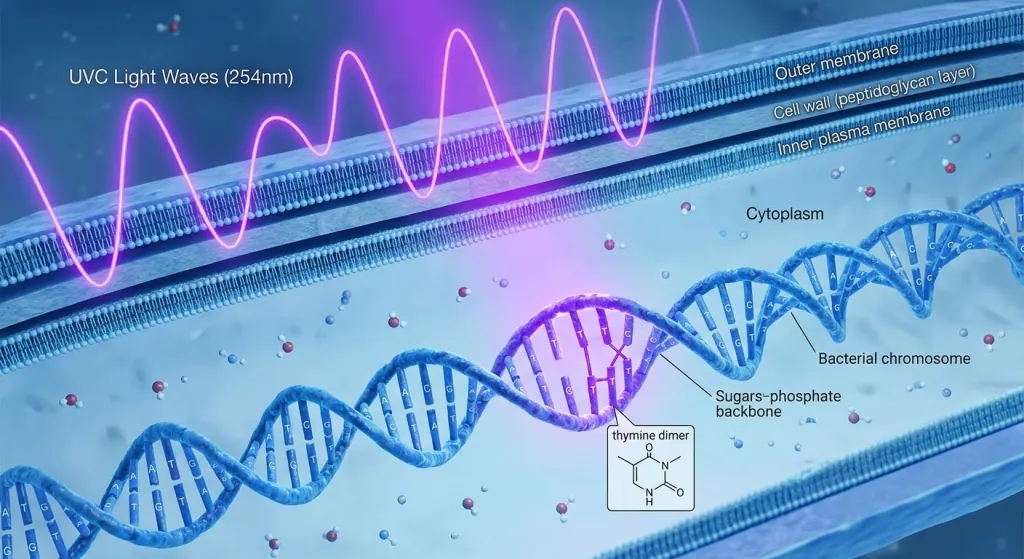
The core mechanism involves photon energy penetrating the cell membranes of microorganisms to directly disrupt the molecular structure of their DNA or RNA. As a result, these pathogens lose their ability to replicate and infect.
1.1 Key Parameters of Germicidal Efficacy
In this context, several factors—rather than a single one—determine disinfection efficacy. Specifically, the industry measures effectiveness by the “UV Dose,” which represents the product of Irradiance and Exposure Time.
In mathematical terms, the formula:
D=I×t
Because different pathogens exhibit varying degrees of sensitivity to ultraviolet light, the primary task of any certification system is to verify whether the equipment can stably output a sufficient dose to inactivate target pathogens under specific flow rates and water quality conditions.
1.2 Technical Barriers in System Integration
Furthermore, constructing a high-performance UVC LED system requires the precise coupling of fluid dynamics, optical design, and thermal management.
To pass stringent international certifications, engineers must effectively overcome “thermal degradation,” the loss of optical transmittance, and material degradation. Consequently, the extent to which a manufacturer resolves these technical challenges directly determines whether the product can secure compliance endorsements from institutions like CE and SGS.
Chapter 2: CE Certification—The Cornerstone of Electrical and Photobiological Safety
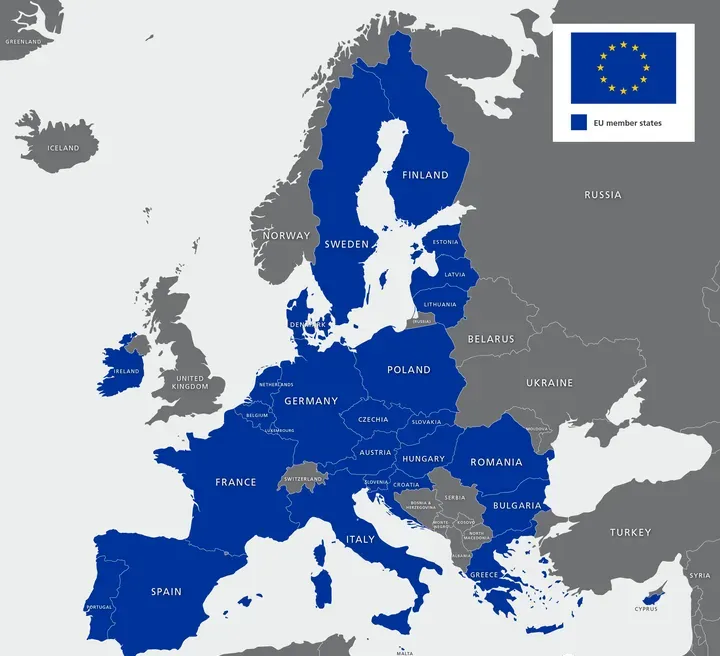
Beyond basic performance, CE certification acts as a mandatory market-entry standard for the European Union. For UVC LED water sterilizers, this certification ensures compliance regarding electrical operation, the electromagnetic environment, and human exposure safety.
2.1 Low Voltage Directive (LVD) and Electrical Safety
To comply with the 2014/35/EU Directive, manufacturers must subject UVC LED sterilizers to rigorous insulation testing and electrical clearance evaluations.
In a water treatment environment, due to the high integration of water and electricity, even the slightest design flaw could lead to electrical leakage or short-circuit risks. Thus, CE certification requires the equipment to maintain excellent electrical integrity even under extreme humidity, temperature fluctuations, and physical impacts.
| Test Item | Reference Standard | Technical Objective |
| Withstand Voltage Test | EN 60335-1 | Verifies the integrity of the insulation system at 1500V/50Hz. |
| Electrical Clearance | EN 60335-1 | Ensures the physical distance between live parts and the casing meets standards. |
| Structural Integrity | IEC 60068 | Evaluates the equipment’s stability under vibration, drops, and thermal shock. |
2.2 Electromagnetic Compatibility (EMC) Directive
Similarly, as smart home water systems become more popular, designers frequently integrate UVC LED modules with sensors and wireless networks.
The EMC Directive (2014/30/EU) ensures that the equipment will not generate electromagnetic waves that interfere with other appliances during operation, whilst simultaneously possessing sufficient anti-interference capabilities itself.
This encompasses Electrostatic Discharge (ESD) testing, surge testing, and conducted emission testing. For LED modules driven by high-frequency switching power supplies, EMC compliance is critical for ensuring the system’s long-term stable operation.
2.3 IEC 62471: Photobiological Safety Standards
Because UVC light poses significant harm to human skin and eyes. Consequently, The IEC 62471 standard categorizes luminaires into four risk groups based on the degree of radiation hazard: Exempt, Risk Group 1 (Low-Risk), Risk Group 2 (Moderate-Risk), and Risk Group 3 (High-Risk).
For residential and commercial water sterilizers, CE certification typically mandates that the design ensures the UVC light source is completely encapsulated within an opaque reaction chamber, thereby reducing external leakage to the “Exempt” level. Any maintenance openings that could lead to direct exposure must be equipped with mandatory safety interlocks; this is a core evaluation item during the certification review.
Chapter 3: SGS Microbial Challenge Testing—The Authoritative Path to Performance Verification
While CE certification focuses on “safety,” SGS testing focuses strictly on “efficacy.” As a world-leading third-party inspection institution, SGS provides microbial challenge reports that validate a product’s “sterilization rate” through direct evidence.
3.1 The Rigour of Challenge Testing
The SGS verification process is generally conducted in a controlled laboratory environment, simulating the harshest real-world water quality conditions.
Testers inject high concentrations of challenge microorganisms (such as E. coli or MS2 bacteriophage) into the system under test, measure the difference in microbial concentration between the inlet and outlet, and calculate the “Log Reduction Value” (LRV).
3.2 The Technical Watershed Between 99.99% and 99.999%
In the water treatment industry, 99.99% (4-log) is typically regarded as the foundational threshold for safe drinking water, whereas 99.999% (5-log) represents superior disinfection performance.
| Inactivation Rate | Log Reduction Value (Log) | Residual Survival Rate | Industry Status |
| 90% | 1-log | 1/10 | Basic pre-treatment |
| 99% | 2-log | 1/100 | Moderate disinfection |
| 99.9% | 3-log | 1/1,000 | Consumer-grade standard |
| 99.99% | 4-log | 1/10,000 | Professional water treatment benchmark |
| 99.999% | 5-log | 1/100,000 | High-end / Medical-grade standard |
The profound significance of SGS certification is that it eliminates the potential biases of a manufacturer’s self-testing.
Products backed by SGS indicate that their optical chamber design, LED array configuration, and flow rate control have achieved the anticipated dosage levels, proving capable of combatting chlorine-resistant pathogens, including Cryptosporidium and Giardia.
Chapter 4: ACS Sanitary Certificate—Specific Requirements for the French and EU Markets
Regarding the French market, the Ministry of Health mandates the ACS (Attestation de Conformité Sanitaire) certificate. This ensures that all materials in contact with drinking water do not cause secondary contamination.
4.1 The Necessity of Material Migration Testing
The core of ACS certification lies in “migration testing.” Within a UVC LED sterilizer, high-energy ultraviolet light can accelerate the degradation of certain polymer materials, leading to the release of harmful chemicals.
ACS mandates immersion experiments for all water-contacting components (such as reaction chamber walls, O-rings, and sleeves) to detect the Total Organic Carbon (TOC), flavour, odour, and the levels of specific toxic substances in the water.
4.2 The Complex Pathway to Obtaining ACS Certification
- Composition Review: Providing a chemical composition list of all materials to the certification laboratory to ensure compliance with the European restricted substances list.
- Laboratory Testing: Conducting migration tests lasting several weeks by authorized laboratories (e.g., CARSO or EUROFINS).
- Certificate Issuance: The 5-year ACS certificate is granted only when all indicators fall below the migration limits.
For enterprises aiming to penetrate the French and surrounding premium markets, ACS is not merely a legal requirement; rather, it is an ultimate commitment to the material purity of their products.
Chapter 5: The Long-Term Value and Market Advantages Brought by Certified Products
Ultimately, products possessing the full suite of CE, SGS, ACS, and NSF 372 certifications offer advantages that extend far beyond market access.
5.1 Enhancing User Trust and Brand Credibility
In the highly transparent market environment of 2025, consumers are no longer satisfied with one-sided manufacturer claims. Through third-party certification, companies can establish fact-based credibility. The appearance of certification marks on packaging serves as a “hard endorsement” of a company’s technical prowess.
5.2 Reducing Legal and Compliance Risks
For OEM/ODM partners, selecting certified components can drastically shorten the secondary certification cycle for their end products. Simultaneously, compliance testing helps identify potential mechanical fatigue or electrical defects during the design phase, thereby lowering future warranty and recall costs.
5.3 Optimizing Product Lifespan and Performance Stability
Environmental stress tests (such as high-temperature storage and high-humidity operation) during the certification process force R&D teams to adopt higher-grade materials.
For instance, to pass long-term operational validation, systems must employ AlN ceramic substrates and highly efficient cooling architectures, which objectively extends the LED’s L70 lifespan to over 10,000 hours.
Chapter 6: Case Study—Certification Practices of Agua Topone’s UVC LED Series
As an industry leader with over 20 years of experience in water treatment, Agua Topone demonstrates its relentless pursuit of water safety through a rigorous certification matrix.
6.1 EC Series: The Quality Cornerstone for Consumer Applications
The EC Series (Models: EC-10, EC-11, EC-12, EC-13) is designed specifically for Point-of-Use (POU) terminals, offering a certification portfolio that balances accessibility with reliability.
- Sterilization Validation: The entire series achieves a 99.99% sterilization rate. With the exception of the EC-13, all models have secured independent validation reports from SGS.
- Safety Compliance: The full series is CE-certified, ensuring electrical safety and photobiological protection in smart home environments.
- Structural Design: It adopts a standard integrated all-in-one structure, achieving certification-level disinfection output within a compact space.
6.2 AGLED Series: The Pinnacle of Professional and Modular Technology
The AGLED Series (Models: AGLED-40002, 40006, 40012, 12G) represents the highest technical standards currently available in the UVC LED water disinfection sector.
- Outstanding Performance: The entire series achieves a 99.999% sterilization rate and has passed rigorous SGS challenge testing.
- Flagship Compliance (AGLED-40002): As the flagship model, this product not only holds CE and SGS certifications but also features additional ACS (France) and NSF 372 (Lead-Free) certifications, giving it a formidable competitive edge in premium global markets.
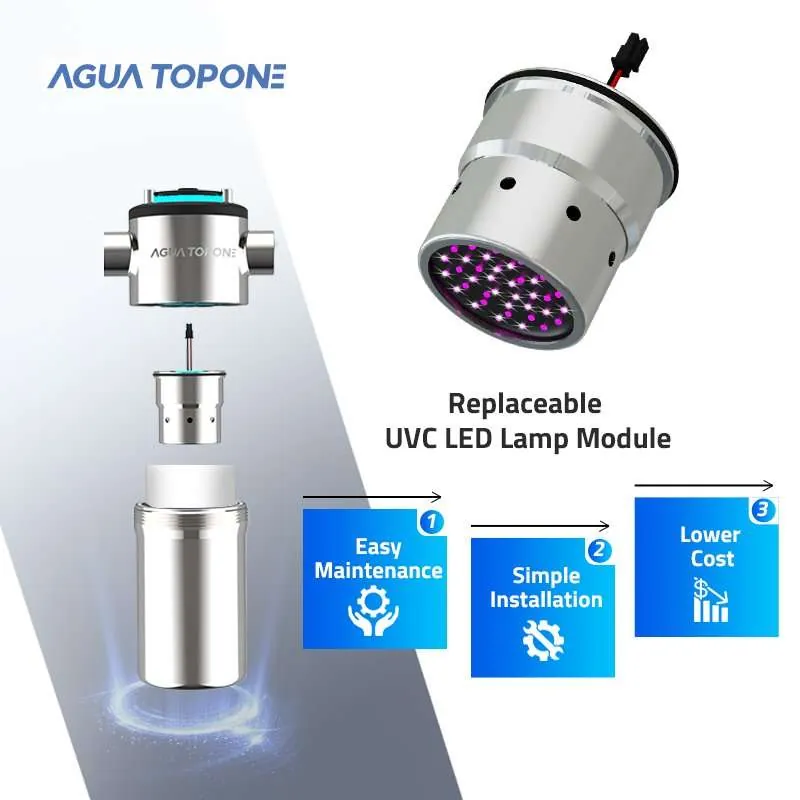
- Serviceability Innovation (AGLED-40012): This model utilizes a revolutionary modular design, allowing the UVC LED component to be replaced as easily as a traditional lamp. This design significantly reduces long-term maintenance costs while maintaining performance certifications.
| Product Series | Model Example | Core Sterilization Rate | CE Certification | SGS Testing | Special Certifications / Design |
| EC Series | EC-10 | 99.99% | Yes | Yes | Integrated compact design |
| EC Series | EC-13 | 99.99% | Yes | No | Terminal appliance integration |
| AGLED Series | 40002 | 99.999% | Yes | Yes | ACS & NSF 372 |
| AGLED Series | 40012 | 99.999% | Yes | Yes | Replaceable modular design |
| AGLED Series | 12G | 99.999% | Yes | Yes | High-flow POE system |
Chapter 7: Global Market Trends and Certification Evolution Outlook (2025-2035)
According to authoritative market data, the global UVC LED market is projected to grow from $1.93 billion in 2025 to $14.34 billion by 2034, representing a Compound Annual Growth Rate (CAGR) of 24.95%.
7.1 International Convergence of Certification Standards
With the revision of the EU Drinking Water Directive (DWD), regional certifications such as ACS, UBA (Germany), and WRAS (UK) may be further integrated in the future, forming a more unified European material evaluation framework.
For enterprises, proactively securing high-threshold certifications will be the key to achieving premium pricing power.
7.2 Smart Monitoring and Dynamic Certification
Future certifications will no longer be limited to static laboratory tests. The integration of AI-driven dosage control systems and real-time monitoring sensors (such as the LED status ring in Agua Topone systems) will become a new dimension of certification.
This requires systems to dynamically adjust LED output based on influent turbidity and flow rate in real-time, ensuring the minimum germicidal dose required by certifications is met at all times.
Chapter 8: Conclusion and Professional Recommendations
Following a comprehensive review of the certification systems in the UVC LED water disinfection field, this study draws the following conclusions:
- Certification is a “Double Insurance” for Safety and Performance: CE, SGS, ACS, and NSF 372 form a multi-dimensional safety net, addressing electrical safety, biological efficacy, material cleanliness, and metal compliance issues, respectively.
- Scientific Understanding of Sterilization Rates: The distinction between 99.99% and 99.999% is not merely a numerical increment; rather, it is the result of precise control over the system’s optical density and fluid residence time. SGS third-party reports serve as the sole legitimate foundation for such claims.
- The Growing Importance of Material Safety: While meeting sterilization requirements, passing ACS and NSF 372 certifications ensures that the equipment does not introduce new chemical risks into the water. This will be the core threshold for the high-end water treatment market of the future.
- Agua Topone’s Exemplary Role in the Industry: Through the differentiated certification configurations of its EC and AGLED series, Agua Topone demonstrates how to precisely align with international compliance requirements based on diverse application scenarios (from residential appliances to professional POE systems), providing the industry with a valuable roadmap for compliant development.
For professional users and partners, selecting products that have passed the aforementioned multiple certifications means choosing not only highly efficient disinfection technology but also a long-term, stable, and safe water health guarantee system.
In today’s world, where global water resource pressures are continually mounting, technological innovation grounded in rigorous certification will be the crucial driving force advancing human drinking water safety.