Case: UVC LED Water Disinfection System Export to France
The global water treatment industry currently experiences a significant technological transition as stakeholders move away from chemical additives and toward high-efficiency physical disinfection methods. Within this shifting landscape, Agua Topone recently achieved a major milestone by successfully delivering fifty units of its newly developed modular UVC LED water purification systems to the French market.
This shipment, which centers on the PP+CTO+AGLED-40012 configuration, represents a synthesis of three-stage filtration and intelligent semiconductor-based sterilization designed specifically for high-end residential and light commercial applications. This technical report analyzes the engineering specifications, quality control protocols, and market implications of this deployment, highlighting how modular design and digital monitoring redefine the standards for safe drinking water in Europe.
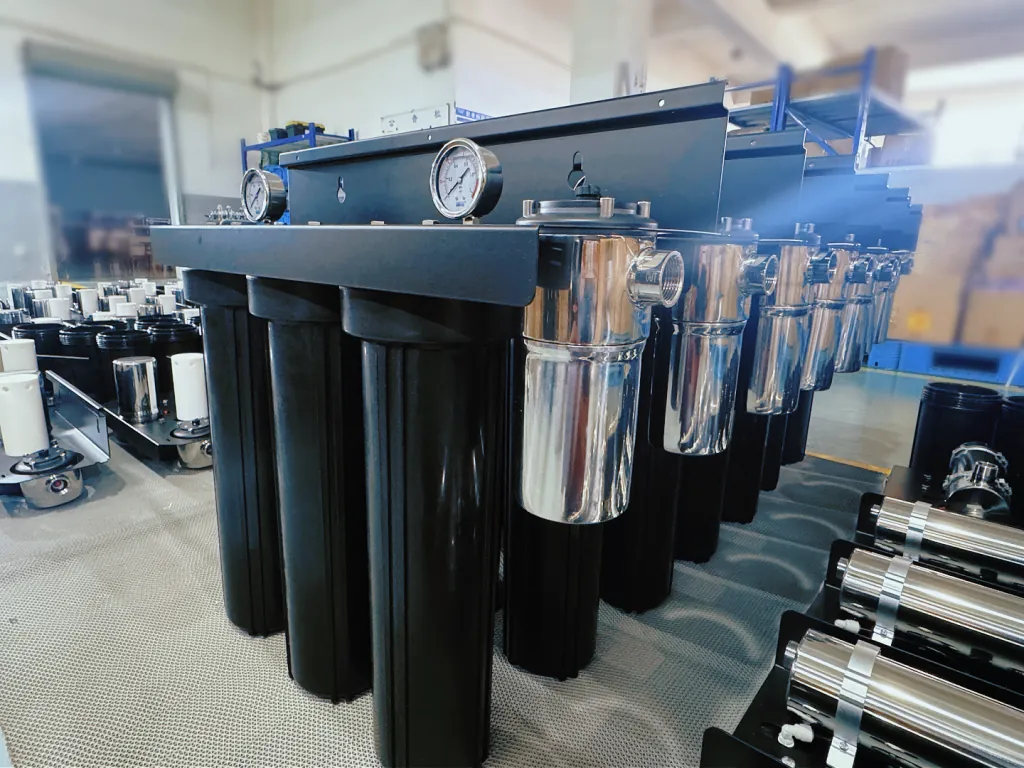
France presents a highly sophisticated regulatory environment for water contact materials, where the Attestation de Conformité Sanitaire (ACS) serves as a mandatory gateway for any product touching the municipal supply. By integrating advanced materials and a modular architecture, the AGLED-40012 system addresses the stringent requirements for safety, durability, and maintenance efficiency prevalent in the French market. The following sections provide an exhaustive examination of the system’s components, from the initial sediment filtration to the final UVC LED irradiation chamber, and the intelligent LED Drivers that govern the entire operation.
Market Context and the French Water Regulatory Landscape
The French water purifier market demonstrates robust growth, with a valuation of \$811.85 million in 2024 and an expected expansion to $1,152.13 million by 2032. This growth stems from increasing concerns over groundwater pollution; reports from the French Ministry of Ecological Transition indicate that approximately 25% of the country’s groundwater resources suffer from contamination, making residential and commercial filtration systems an essential investment for public health. In particular, disinfection methods constitute the largest revenue-generating technology segment in France, reflecting a market that values microbiological safety above all else.
The Role of ACS Certification
Manufacturers who intend to penetrate the French market must comply with the Decree of 29 May 1997, which mandates the ACS certification for all materials and accessories intended for drinking water contact. This certification ensures that components do not modify the organoleptic, physicochemical, or microbiological properties of the water. Consequently, the selection of 304 or 316L stainless steel for the AGLED-40012 reactor and the use of food-grade polypropylene for the filter housings align with these rigorous sanitary standards.
| Market Characteristic | Detail for the French Market |
| Market Valuation (2024) | $811.85 Million USD |
| Projected CAGR (2025-2032) | 5.13% |
| Mandatory Certification | Attestation de Conformité Sanitaire (ACS) |
| Leading Segment | Disinfection Methods (16.48% share) |
| Key Market Driver | Groundwater pollution affecting 25% of resources |
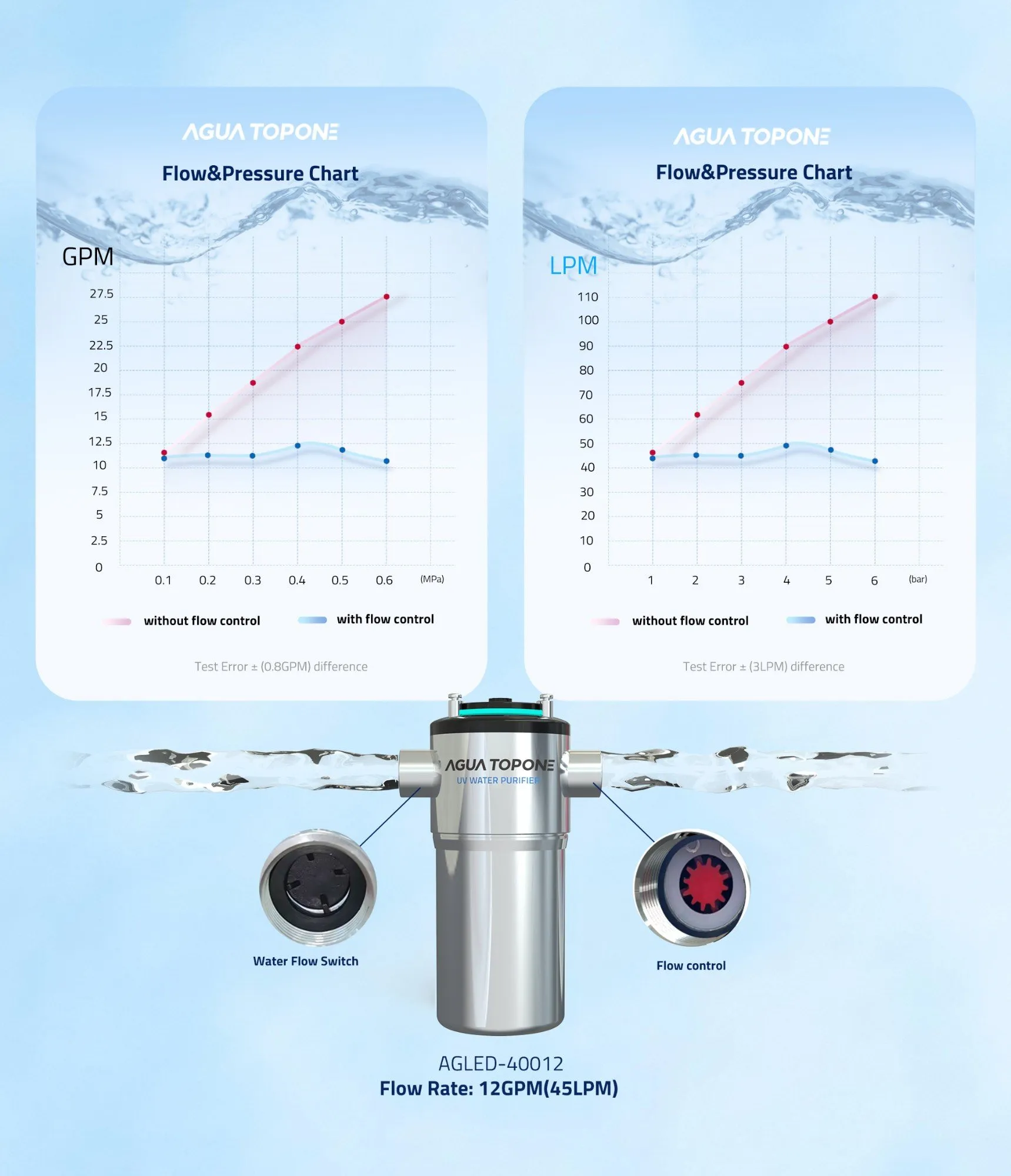
The French consumer typically prefers Point-of-Entry (POE) systems that protect the entire household infrastructure, including showers, washing machines, and water heaters. The AGLED-40012 system fulfills this preference by offering a high flow rate of 12 Gallons Per Minute (GPM), which supports simultaneous water use across multiple taps without compromising pressure or disinfection efficacy.
Technical Architecture: The Three-Stage Filtration Synergy
Agua Topone designs its modular systems based on a sequential treatment logic that maximizes the effectiveness of each stage. By combining physical filtration, chemical adsorption, and ultraviolet irradiation, the system provides a comprehensive barrier against a wide spectrum of contaminants.
Stage 1: Polypropylene (PP) Sediment Pre-filtration
The purification process begins with a melt-blown polypropylene (PP) filter cartridge. This component serves as the primary mechanical shield, designed to trap larger particles such as silt, rust, dirt, and sand.
- Mechanical Mechanism: The PP filter utilizes depth filtration, where the fiber density increases toward the core. This structure allows the cartridge to capture larger debris on the surface while finer sediments remain trapped within the inner layers, preventing premature surface clogging and maintaining a steady flow rate.
- Protection of Downstream Components: Pre-filtration is vital for UVC systems because suspended solids can create a “shadowing” effect. In this scenario, pathogens hide behind physical particles and escape direct exposure to the germicidal UVC rays. Furthermore, removing sediment prevents the build-up of abrasive particles that could damage the internal surfaces of the UVC reactor.
Stage 2: Carbon Block (CTO) Adsorption
The second stage features a Chlorine, Taste, and Odor (CTO) carbon block filter. This stage utilizes high-adsorption coconut shell activated carbon to chemically polish the water.
- Adsorption Science: Activated carbon possesses a massive internal surface area characterized by millions of microscopic pores. As water flows through the block, organic molecules, pesticides, and residual chlorine bind to the carbon surface through van der Waals forces.
- Chemical Reduction: Chlorine is a powerful oxidant that French municipal systems use for basic disinfection, but it often imparts an unpleasant chemical taste and odor to tap water. The CTO block effectively neutralizes these aesthetic issues, ensuring the final product is crisp and refreshing.
- Safety for Subsequent Stages: Chlorine can degrade certain materials and seals over time. By removing it during the second stage, the CTO filter protects the longevity of the UVC LED module’s sealing components.
Stage 3: AGLED-40012 UVC LED Disinfection Module
The final and most technologically advanced stage is the AGLED-40012 module. This unit represents the cutting edge of semiconductor-based water treatment, utilizing deep ultraviolet light to achieve a 99.999% (Log-5) reduction in bacteria such as E. coli at flow rates up to 12GPM.
| Parameter | Specification for AGLED-40012 |
| Maximum Flow Rate | 12 GPM (45 LPM) |
| E. coli Removal Rate | 99.999% (SGS Certified) |
| Wavelength Range | 265 nm – 275 nm (Germicidal Band) |
| Power Consumption | 50 W to 126 W |
| Rated LED Lifespan | L70 5000hrs |
| Operating Pressure | Up to 10 Bar (Tested) |
This stage acts as the final “polishing” barrier, neutralizing any microorganisms that managed to bypass the initial filtration stages. Unlike traditional methods, this process remains purely physical, adding no chemicals to the water and producing no harmful disinfection by-products.
Engineering Innovations in the AGLED-40012
The AGLED-40012 module is not merely a replacement for traditional UV lamps; it is a ground-up redesign of the ultraviolet reactor. Agua Topone’s R&D team focused on three core engineering pillars: modularity, thermal management, and optical efficiency.
World-First Modular Replaceable Design
Traditional UVC LED systems often require the replacement of the entire reactor or the entire unit when the LEDs reach the end of their operational life, which creates significant economic and environmental waste. The AGLED-40012 solves this industry pain point by featuring the world’s first detachable and replaceable LED module.
This design allows the user to simply swap the core electronic component while retaining the stainless steel reactor body. Maintenance personnel can perform this replacement in approximately 90 seconds without the use of specialized tools, improving service efficiency by over 80%. This modularity significantly lowers the long-term maintenance costs for French homeowners, making the transition to LED technology more financially attractive.
Intelligent UVC LED Driver & Visual Monitoring
5000-Hour Countdown UVC LED Driver
One of the primary challenges with ultraviolet disinfection is that the light source eventually loses its germicidal potency, even if it still appears to be lit to the human eye. The intelligent LED Driver addresses this by tracking the precise “on-time” of the UVC LED module:
- Real-Time 5000-Hour Countdown: The digital display provides a real-time countdown starting from 5000 hours. This specific duration aligns perfectly with the rated lifespan of the high-performance UVC LED chips, making maintenance intervals visible and predictable for the end-user.
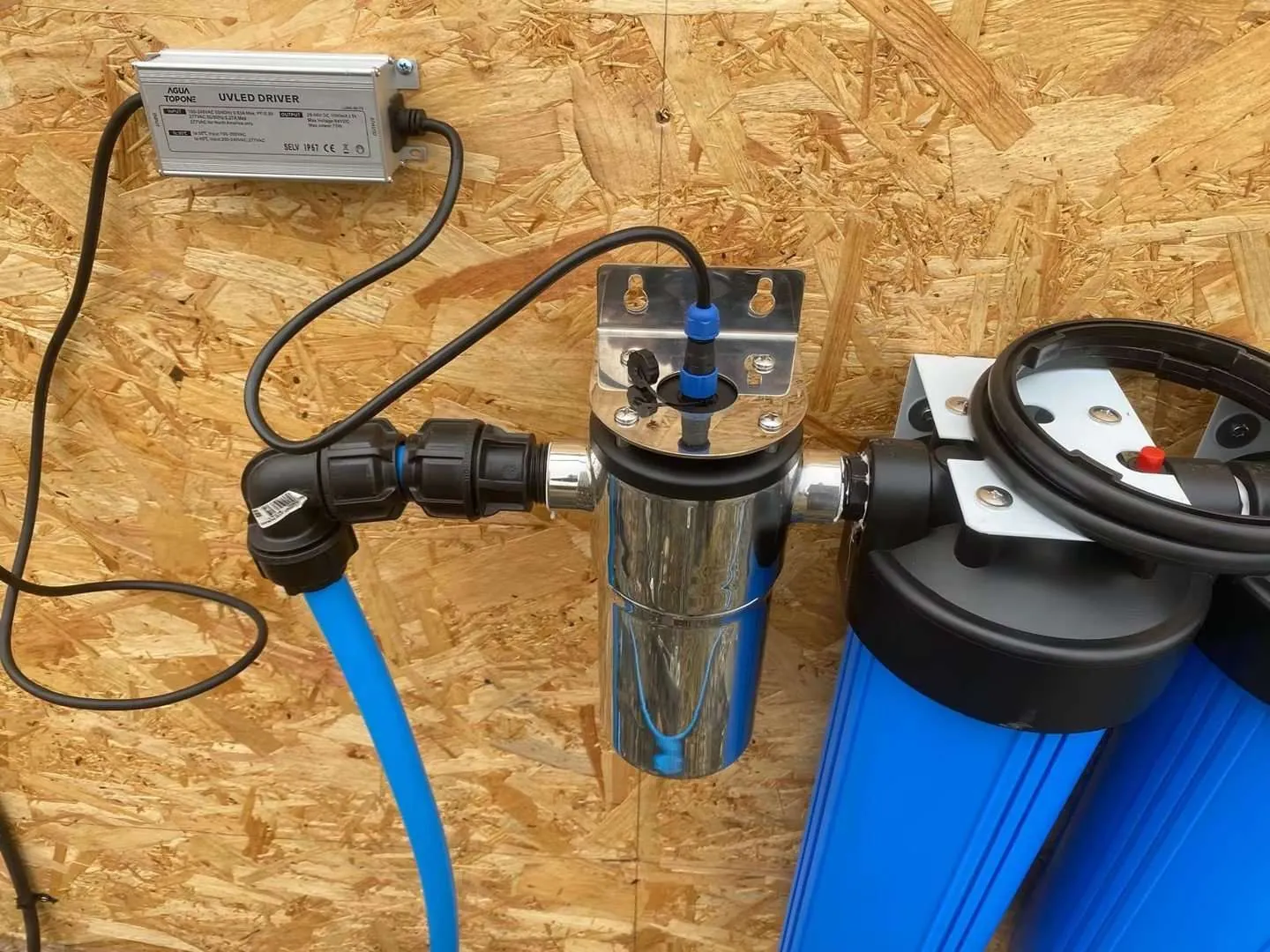
- Blue LED Indicator Ring: For immediate status verification, the system features an integrated LED indicator ring. This ring glows with a steady blue light whenever the system is actively running, providing users with instant visual confirmation that the disinfection process is functioning correctly.
- End-of-Life & Fault Alerts: When the countdown reaches its limit, or if the system detects a circuit failure, the LED Driver triggers audible and visual alarms. This “safety-first” design prevents the consumption of untreated water and ensures the household remains protected at all times.
On-Demand Operation via Flow Sensors
Unlike traditional mercury-based lamps, which must remain on 24/7 due to long warm-up times and limited on-off cycle durability, the AGLED-40012 can be cycled on and off thousands of times without performance degradation.
The intelligent Driver integrates a water flow switch that detects the movement of water as soon as a tap is opened. The system instantly activates the UVC LEDs, providing full germicidal power within milliseconds. Once the tap is closed and water flow stops, the Driver deactivates the LEDs. This on-demand operation mode significantly extends the product’s lifespan—up to 6 to 10 years in typical residential use—and reduces total energy consumption by over 70% compared to traditional systems.
| Driver Feature | Advantage for the End-User |
| Digital Countdown | Accurate tracking of module life |
| Audible Alarm | Immediate notification of system failure |
| Flow Switch Integration | Instant activation, zero energy waste |
| Delay Shutdown | Prevents the “first cup” hot water phenomenon |
| Overburden Protection | Protects internal circuitry from power surges |
The Aluminum Alloy Shell: Protection and Durability
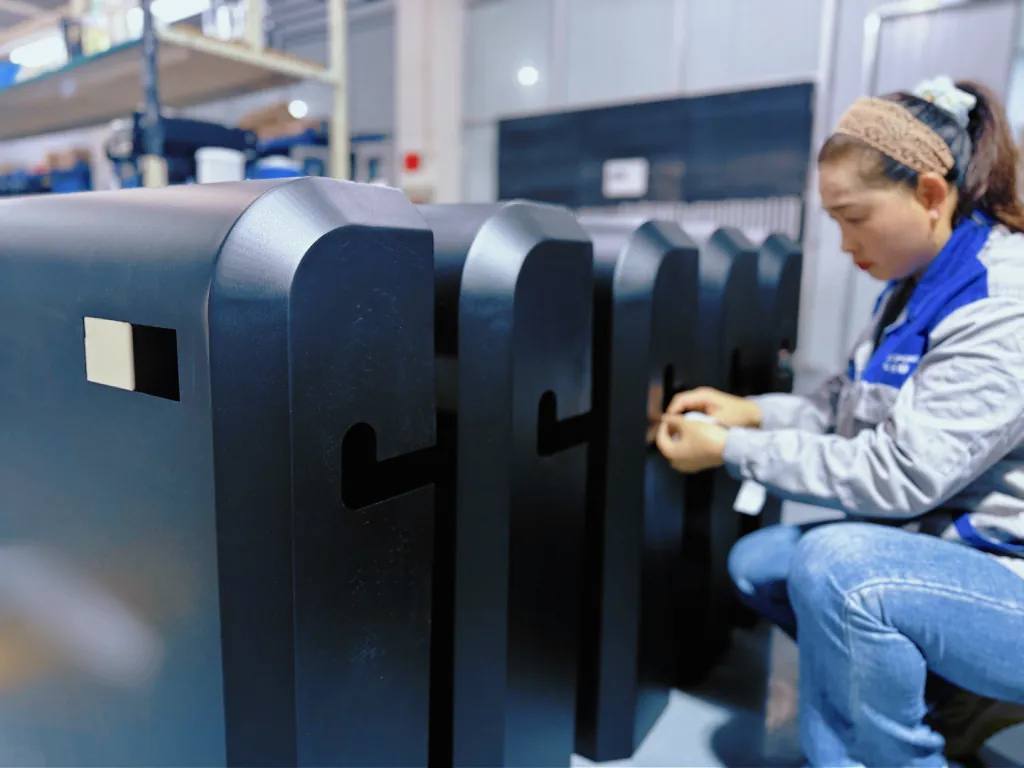
A unique feature of the systems delivered to the French market is the addition of an aluminum alloy protective shell. While many manufacturers prioritize cost by using plastic brackets or bare stainless steel, Agua Topone utilizes this alloy housing to provide several technical advantages.
Prevention of UV-Induced Material Aging
High-intensity UVC light, while beneficial for disinfection, can be detrimental to plastics over long periods. Standard plastic filter housings exposed to internal UV leakage or stray radiation can undergo photo-aging, becoming brittle and prone to cracking under pressure. The aluminum alloy shell acts as a total radiation block, shielding the filter housings and the external environment from any UV exposure. This significantly increases the reliability and safety of the entire assembly over its 10-year design life.
Portability and Installation Ease
Aluminum alloy offers high structural strength with a much lower density than traditional steel. This weight reduction makes the 3-stage modular system significantly easier to handle during international shipping and onsite installation. Furthermore, the aluminum shell protects the sensitive UVC LED Drivers and wiring from physical impact and environmental moisture, ensuring the unit remains in factory condition even in the damp basements common in French residential plumbing layouts.
Case Study: The 50-Unit French Shipment Quality Protocols
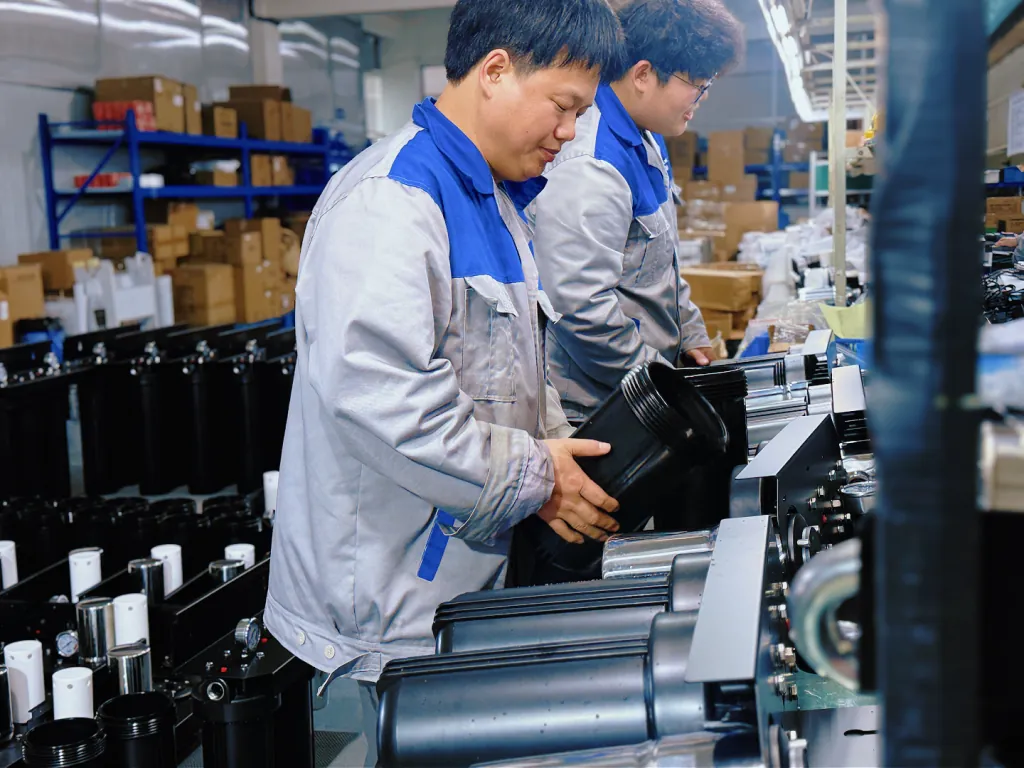
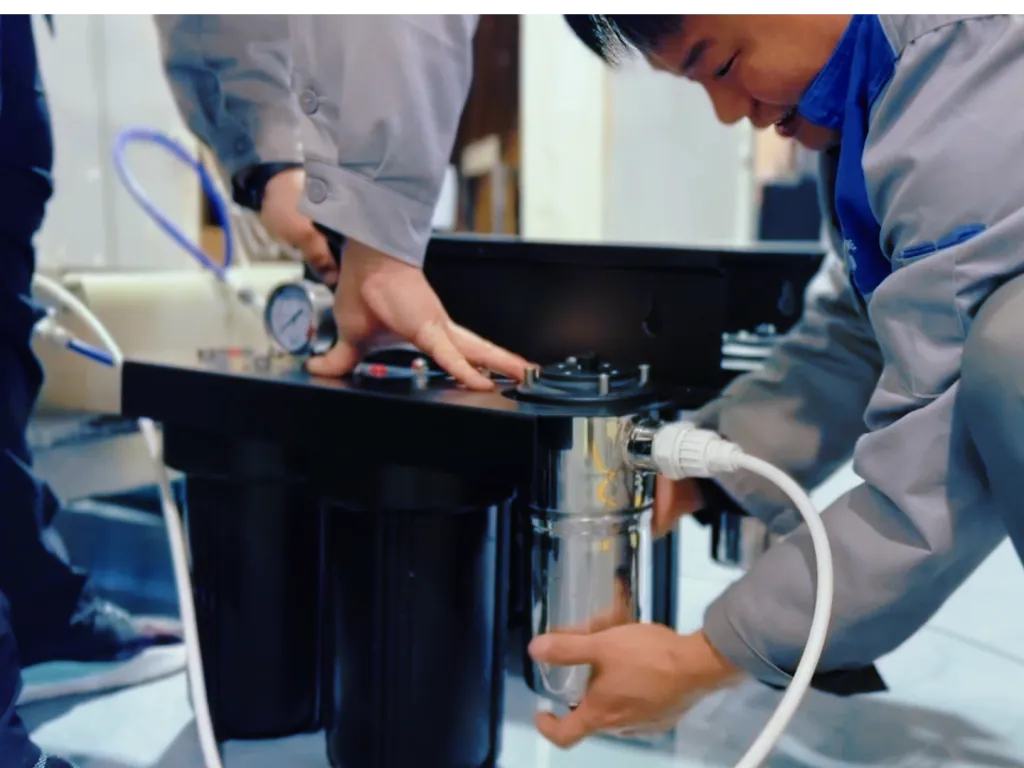
The production of the fifty units delivered to France required approximately two months of intensive assembly and testing at Agua Topone’s Ningbo facility. To ensure 100% reliability for the overseas customer, every unit underwent the “Three Trials” protocol before it was cleared for packing.
Trial 1: High-Pressure Integrity Testing
The engineering team subjected each fully assembled system to a 10 bar (1.0 MPa) pressure test for a continuous duration of one hour. This test ensures that all joints, O-rings, and filter housing seals can withstand pressures far exceeding the standard French municipal supply (typically 3-4 bar). Any unit showing even a trace of moisture at the interfaces was immediately isolated for re-engineering.
Trial 2: UVC LED Stability Aging
Every AGLED-40012 module underwent an aging test to verify the stability of the semiconductor chips. This process involves running the LEDs under load to ensure there are no early-life failures in the AlGaN junctions or the eutectic bonding. This rigour ensures that the 5-year or 6-year operational guarantee provided to the French distributor rests on empirical data rather than theoretical projections.
Trial 3: Dynamic Water Flow and Sensor Validation
Finally, technicians performed a water passage test to calibrate the flow sensors. This test confirms that the intelligent LED Driver correctly interprets the signal from the flow switch and activates the UVC LED module without delay. It also verifies that the “instant-off” function works correctly, preventing energy waste when water use ceases.
The Foundation of Agua Topone’s Global Presence
The success of this French shipment is supported by Agua Topone’s long history as a specialized manufacturer of UV water treatment solutions. Established in 2006, the company brings over 17 years of R&D and manufacturing experience to the table.
Expertise and Authoritativeness
Agua Topone operates from a 10,000+ square meter facility in Ningbo, China, where it manages the entire production cycle from hardware machining to LED Drivers assembly. The company holds over 20 patents in the field of ultraviolet technology, including pioneering designs for modular UVC LED reactors. This vertical integration allows for a level of quality control that is rarely found in the decentralized water treatment market.
Trustworthiness and Certifications
Global water giants and Fortune 500 water companies have established strategic partnerships with Agua Topone, relying on its manufacturing excellence for their private-label products. The company’s commitment to quality is further evidenced by its comprehensive list of international certifications, ensuring that its products meet the diverse safety and performance standards of over 80 countries.
| Certification | Relevance |
| ISO 9001 | Global Standard for Quality Management Systems |
| CE & RoHS | European Safety and Environmental Compliance |
| SGS Certified | Independent verification of 99.999% bacteria kill rates |
| EPA Registered | Compliance with US Environmental Protection Agency standards |
Comparative Analysis: UVC LED vs. Traditional Systems
The French shipment marks a deliberate move toward LED technology, which offers significant advantages over traditional low-pressure systems. These benefits are particularly aligned with the needs of the modern, environmentally conscious European household.
Operational and Environmental Efficiency
The AGLED-40012 module completely eliminates the use of toxic components, making it safer for household installation and easier to dispose of at the end of its lifecycle. Furthermore, because LEDs do not contain fragile glass tubes or gas vapors, they are fundamentally more robust and resistant to the vibrations encountered during international logistics.
| Feature | Traditional Low-Pressure UV | AGLED-40012 UVC LED |
| Startup Time | 30s – 2min Preheating | Instant (<100ms) |
| Mercury Content | 5mg – 200mg per lamp | Zero (Mercury-Free) |
| Operational Life | ~9,000 Hours (Continuous) | L70 5000hrs (Active Use Only) |
| On/Off Cycles | Limited (<4 per day for longevity) | Virtually Unlimited |
| Maintenance | Annual lamp/sleeve replacement | 10-year module lifespan |
Pathogen Inactivation Precision
Low-pressure systems emit a fixed wavelength of 253.7 nm. While effective, this is not perfectly aligned with the peak DNA absorption spectrum (approx. 265 nm). In contrast, the AGLED-40012 can be engineered to emit precisely in the 265–275 nm range, ensuring that every photon is utilized for maximum germicidal impact. This precision allows the unit to neutralize resistant organisms such as Cryptosporidium and Giardia more effectively than previous generations of technology.
Operational Best Practices for the French Market
To maintain the high performance of the AGLED-40012 system, users and distributors in France should adhere to specific water quality and maintenance parameters. These guidelines ensure that the system operates within its design envelope and continues to provide safe water for the entire home.
Influent Water Quality Standards
UV disinfection is a transparency-dependent process. If the water contains high levels of dissolved minerals or suspended solids, the effectiveness of the UVC photons will be reduced.
- Turbidity & TSS: The water should have a turbidity of less than 1 NTU and total suspended solids below 10 mg/L. The inclusion of the PP pre-filter stage specifically addresses this requirement by clarifying the water before it enters the UV chamber.
- Iron & Manganese: High levels of these metals can cause staining on the sapphire windows of the LED module, which blocks UV transmission. Ideally, iron should be less than 0.3 ppm and manganese less than 0.05 ppm.
- Hardness: To prevent scale buildup on the internal windows, water hardness should be below 7 grains per gallon (120 mg/L). If local French water supplies exceed this, the installation of a descaler or softener upstream of the system is recommended.
Maintenance of the Modular System
The countdown LED Driver provides the primary maintenance signal, but the operator should also perform regular visual inspections of the pre-filters.
- Stage 1 & 2 Cartridges: Depending on local water quality, the PP and CTO filters should be replaced every 6 to 12 months. A noticeable decrease in water pressure at the taps is a common indicator that the filters have become loaded with sediment and organic matter.
- UVC LED Module Replacement: When the intelligent LED Driver alerts the user that the module’s life has reached zero, the owner should obtain a replacement AGLED-40012 module. The tool-free, 90-second replacement process ensures that the household’s water safety is restored with minimal downtime.
- System Reset: After replacing the LED module, the technician should reset the LED Driver timer to begin a new countdown cycle.
Conclusion: Setting a New Standard for European Water Safety
The successful delivery of fifty modular UVC LED systems to France demonstrates that the water treatment industry is ready for the next phase of evolution. By moving away from fragile, mercury-based lamps and adopting solid-state, modular LED technology, manufacturers can provide a higher level of safety, efficiency, and sustainability for modern households. The AGLED-40012 system, with its 3-stage filtration and intelligent monitoring, addresses the specific geographical and regulatory challenges of the French market, offering a solution that is both technologically superior and economically viable in the long term.
The integration of the aluminum alloy shell and the intelligent countdown LED Driver reflects a deep understanding of the end-user’s needs, prioritizing protection against material aging and transparency in system status. As global trends continue to favor chemical-free and energy-efficient technologies, modular UVC LED systems will likely become the standard for Point-of-Entry water purification across Europe and beyond. Agua Topone’s commitment to quality manufacturing and technical innovation ensures that it remains at the forefront of this movement, delivering clean water solutions that improve the lives of families worldwide.